Heart Palpitations at Night: What to Track
Heart palpitations at night may feel like pounding, fluttering, racing, or skipped beats. Pause activity, note what you feel and any other symptoms, and avoid assuming anxiety is the cause. Get emergency help for palpitations with chest pain, severe breathing trouble, fainting, or severe dizziness; arrange assessment for new, recurring, worsening, or prolonged episodes.
 Lalit SSeptember 9, 202610 min read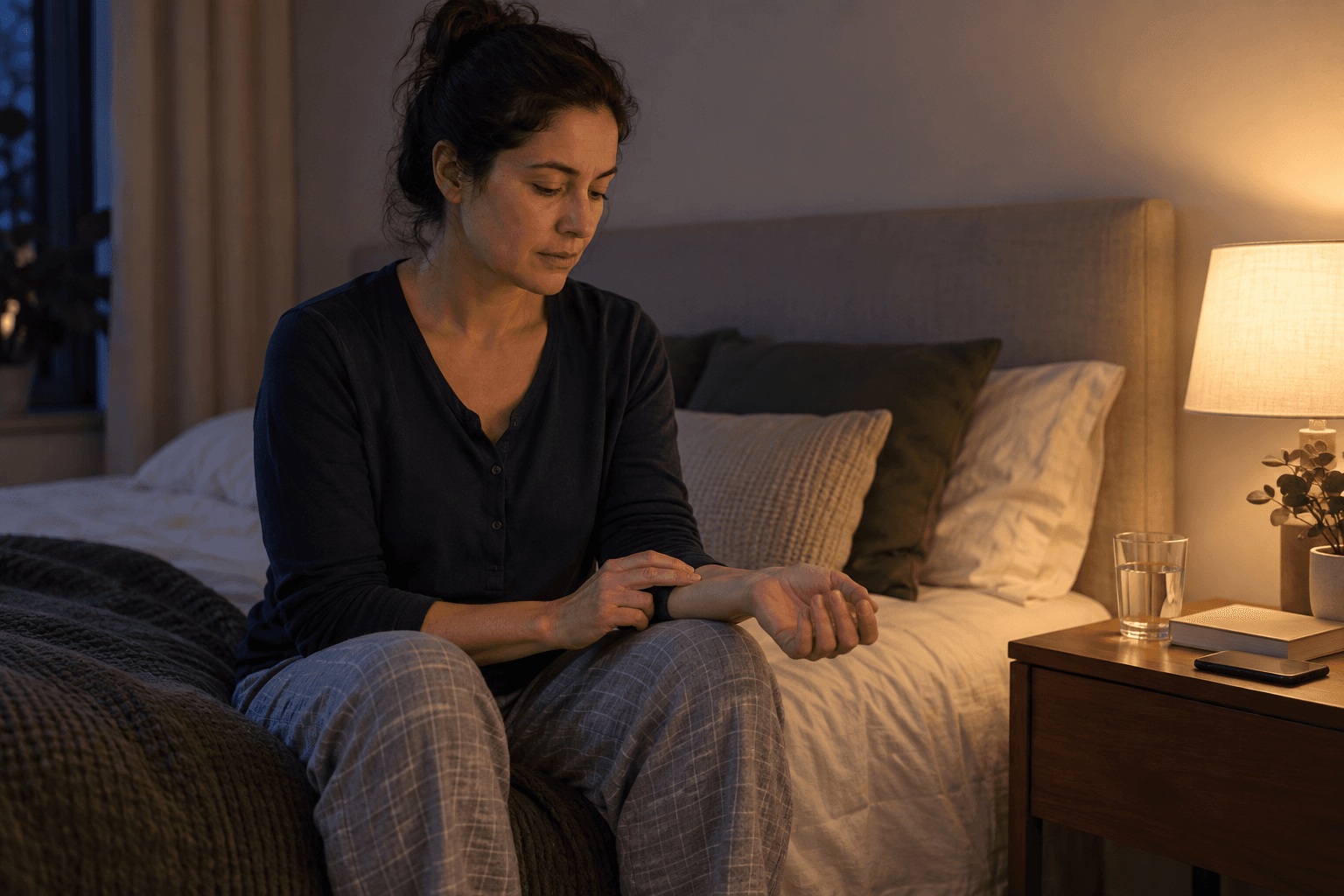
Useful health tools
Try one of our most searched health calculators.
BMI Calculator
Estimate body mass index from height and weight, with a plain-language category.
Daily Calorie Needs Calculator
Estimate maintenance calories and gentle weight-change ranges by activity level.
Sleep Calculator
Work backward from a wake-up time to estimate when to get into bed for an adult sleep target.
Quick answer: Heart palpitations at night may feel like pounding, fluttering, racing, or skipped beats. Pause activity, note what you feel and any other symptoms, and avoid assuming anxiety is the cause. Get emergency help for palpitations with chest pain, severe breathing trouble, fainting, or severe dizziness; arrange assessment for new, recurring, worsening, or prolonged episodes.
The room is quiet, you lie down, and suddenly every beat feels loud. Heart palpitations at night can be easier to notice when daytime distractions disappear, but timing alone cannot tell you whether the rhythm is harmless, triggered by something changeable, or needs medical assessment. The useful first move is not to diagnose the sensation from bed. It is to check for urgent symptoms, describe the episode clearly, and preserve the details a clinician can use.
Why are heart palpitations at night worth tracking?
Visible search results repeatedly explain what palpitations feel like, list caffeine, alcohol, nicotine, stress, medicines, hormones, thyroid problems, anemia, and abnormal rhythms as possibilities, and name chest pain, breathlessness, dizziness, and fainting as warning signs. Many stop at a broad trigger list. This guide adds a night-specific position–pattern–pulse–context record, separates a sensation from a measured rhythm, and explains what a phone or wearable can and cannot contribute without treating consumer data as a diagnosis.
What can a useful nighttime record look like?
Arun notices three brief flutters after getting into bed. He feels otherwise well, but the episodes have happened on four nights this month. Instead of deciding that coffee or anxiety must be responsible, he records the time, position, sensation, approximate duration, evening medicines and drinks, and whether his pulse felt steady or irregular. He books a routine appointment and brings the notes, while knowing which added symptoms would make the situation urgent.
What should you do when heart palpitations start at night?
- Stop what you are doing and check how you feel overall. Chest pain, severe shortness of breath, fainting, severe dizziness, confusion, or a palpitation that will not stop changes the response from tracking to urgent help.
- Describe the sensation before reaching for a cause: pounding, fluttering, racing, an extra beat, a pause, or an irregular pattern. Note whether it began and ended suddenly and how long it lasted.
- If you can do so calmly, feel your wrist pulse or note a device reading once. Record whether it seemed steady or irregular and the number shown, but do not repeatedly measure or let a consumer device overrule serious symptoms.
- Record the nighttime context: lying position, recent activity, stress, sleep loss, fever or illness, caffeine, alcohol, nicotine, recreational stimulants, meals, hydration changes, and every medicine or supplement taken that day.
- Do not stop a prescription, take somebody else's heart medicine, add electrolyte supplements, or force fluids based on an online cause list. Ask a clinician or pharmacist to review medicines and safe next steps.
- Arrange an assessment for a first unexplained episode, repeated or worsening episodes, episodes lasting more than a few minutes, or palpitations that affect sleep or daily life—especially with heart disease, pregnancy, or a family history of heart problems.
- Keep the record brief and bring it to the appointment. A clinician may use the history, examination, ECG, blood tests, or longer rhythm monitoring depending on the pattern.
Why do heart palpitations feel stronger at night?
A palpitation is an increased awareness of your heartbeat. It may feel like pounding, fluttering, racing, skipping, or an extra beat in the chest, neck, or throat. A quiet room and lying still can make a beat easier to notice, so the fact that it happens at night does not identify the cause.
Some people notice a position pattern, while others notice an evening exposure or a symptom that also occurs during the day. Write down whether you had just lain down, rolled to one side, stood up, eaten, exercised, or woken suddenly. If standing is the trigger and lightheadedness is prominent, compare the site's standing-dizziness tracker without deciding that blood pressure explains the palpitation.
What can trigger palpitations after you lie down?
Credible medical sources list stress or anxiety, strenuous activity, lack of sleep, fever, caffeine, nicotine, alcohol, recreational stimulants, and some medicines—including certain decongestants—as possible triggers. Hormonal changes, anemia, thyroid disease, electrolyte problems, and heart-rhythm conditions can also be relevant. A list of possibilities is not a way to diagnose your episode.
Review timing rather than banning everything. Note the amount and time of caffeine or alcohol, the exact medicine or supplement name, recent illness, sleep opportunity, and any change from your usual routine. If worry arrives after the sensation, the site's low-stimulation racing-thoughts reset may help you settle after urgent symptoms are excluded; it should not be used to explain away a new cardiac symptom.
Use a position–pattern–pulse–context card
Complete one row for each distinct episode. The card is designed to improve a clinical conversation, not to decide whether your rhythm is normal.
| Track | Write down | Why it helps |
|---|---|---|
| Position | Back, left or right side, sitting, standing, after movement | Shows when awareness begins |
| Pattern | Pounding, flutter, racing, pause, extra beat; sudden or gradual start | Preserves your description |
| Pulse or device | One calm reading, steady or irregular, screenshot if available | Adds context without diagnosing |
| Duration | Start time, stop time, recurrence | Shows burden and change |
| Other symptoms | Pain, breathlessness, dizziness, faintness, sweating, fever | Changes urgency |
| Context | Sleep, stress, illness, exercise, food, caffeine, alcohol, nicotine | Surfaces possible associations |
| Medicines | Prescription, nonprescription, inhalers, supplements, dose time | Supports a safe review |
Can a smartwatch tell you what the rhythm is?
A consumer wearable can sometimes preserve a heart-rate or rhythm reading to show a clinician, but a reading is not the same as a diagnosis. A device may miss a brief episode, produce an unclear signal, or flag something that needs confirmation. Symptoms still matter even when the screen looks reassuring.
If you capture a reading, save it once with the time and symptoms. Do not delay emergency help to obtain a cleaner trace. For recurring episodes, a clinician may choose an ECG or a Holter, event, or other monitor that records electrical activity during ordinary life.
What might a clinician ask or test?
Expect questions about the feeling, frequency, duration, sudden versus gradual onset, position, activity, other symptoms, medicines, caffeine and substance use, medical history, and family history. Bring the containers or a complete list of prescriptions, over-the-counter products, inhalers, and supplements.
An ECG records the heart's electrical activity. Depending on the pattern, clinicians may consider blood tests for contributors such as thyroid or electrolyte abnormalities and longer rhythm monitoring when an office ECG does not capture intermittent symptoms. The test plan depends on your history; this article cannot choose it.
What should you say when you book the appointment?
Try: ‘I have had [number] episodes of pounding, fluttering, racing, or skipped beats, usually at [time] while [position/activity]. They last about [duration], begin [suddenly/gradually], and occur with [other symptoms or none]. My pulse or device showed [observation], and these are my medicines, supplements, caffeine, alcohol, nicotine, recent illness, and family heart history.’
Ask whether the timing requires urgent review, what to do during another episode, whether any medicine or supplement needs review, and whether an ECG or monitor is appropriate. If fatigue or unrefreshing sleep accompanies snoring or gasping, the site's sleep-apnea warning-sign guide can organize separate observations for the clinician.
What common palpitation mistakes should you avoid?
- Calling every nighttime palpitation anxiety before a clinician has assessed a new or changing pattern.
- Assuming that a normal smartwatch reading proves nothing is wrong—or that one alert proves a dangerous rhythm.
- Testing several triggers at once, such as abruptly stopping caffeine, adding supplements, and changing medicines, so the pattern becomes harder to interpret.
- Counting the pulse over and over until attention and fear amplify the sensation.
- Ignoring decongestants, inhalers, thyroid medicines, stimulants, nicotine, alcohol, cannabis, supplements, or recreational drugs when preparing the medication list.
- Driving yourself for emergency care while faint, severely dizzy, breathless, or having chest pain.
When should heart palpitations get medical care?
Call your local emergency number now if palpitations are continuing and occur with chest pain or pressure, severe shortness of breath, fainting, near-fainting, severe dizziness, confusion, or other signs of serious illness. Do not drive yourself. Seek prompt medical advice if those symptoms have stopped, or if palpitations are new, different, increasingly frequent, last more than a few minutes, disturb daily life, or occur with known heart disease. Pregnancy, a personal heart condition, or a family history of serious rhythm problems should be included when you contact care.
Questions this guide answers
These are the practical questions readers usually bring to this topic. The short answers below are intentionally direct, and the surrounding sections explain the context, cautions, and when professional guidance matters.
Why do I notice heart palpitations more when lying down?
Quiet surroundings and less distraction can make your heartbeat easier to notice, and some people report a position pattern. Nighttime timing alone cannot identify whether the rhythm is normal or abnormal.
Can stress cause heart palpitations at night?
Stress and anxiety are recognized triggers, but they should not be assumed to explain a first, changing, prolonged, or symptomatic episode. Record the context and seek assessment when indicated.
Can caffeine cause palpitations hours later?
Caffeine is a possible trigger, and timing and sensitivity vary. Record what you consumed and when rather than assuming caffeine is the cause or stopping several things at once.
Should I use my smartwatch during heart palpitations?
If it is safe and easy, one saved reading may help a clinician. Do not repeatedly check, treat the device as a diagnosis, or delay urgent care for serious symptoms.
When are heart palpitations at night an emergency?
Seek emergency help when continuing palpitations occur with chest pain or pressure, severe breathing trouble, fainting or near-fainting, severe dizziness, confusion, or other signs of serious illness.
Sources
Health Wellness Daily uses current government, health-system, and professional heart-health sources to support medical claims. Sources reviewed for this article include:
- MedlinePlus: Heart palpitations
- NHLBI: Arrhythmia symptoms
- NHLBI: Arrhythmia diagnosis
- NHS: Heart palpitations
- American Heart Association: How serious are heart palpitations?
- Cleveland Clinic: Heart palpitations at night
- NHLBI: Heart tests
By Lalit S · Researched and sourced, not medical advice · Last reviewed 2026-09-09
A note before we start: I'm not a medical professional. This is a researched, plain-language guide with every health claim linked to a credible source so you can check it and bring it to your own doctor. It's for general education — not a diagnosis, and not a substitute for care from someone who knows your history.
How this article was made: I researched current guidance from the sources above, drafted with AI assistance, and fact-checked every claim against its source before publishing. I'm not a medical professional — corrections from clinicians are welcome at contact@healthwellnesdaily.com.
Medical disclaimer: This content is for general information only and is not medical advice. Always consult a qualified healthcare professional about your own symptoms.



Comments
Verified readers can comment. New comments are reviewed before they appear.