How to Read Added Sugar on Food Labels
To read added sugar on a U.S. food label, check the serving size first, then find “Includes X g Added Sugars” beneath Total Sugars. The added-sugar grams are already part of Total Sugars, so do not add the two numbers together. Use % Daily Value to compare similar products, while considering the whole food and your usual portion.
 Lalit SAugust 22, 202610 min read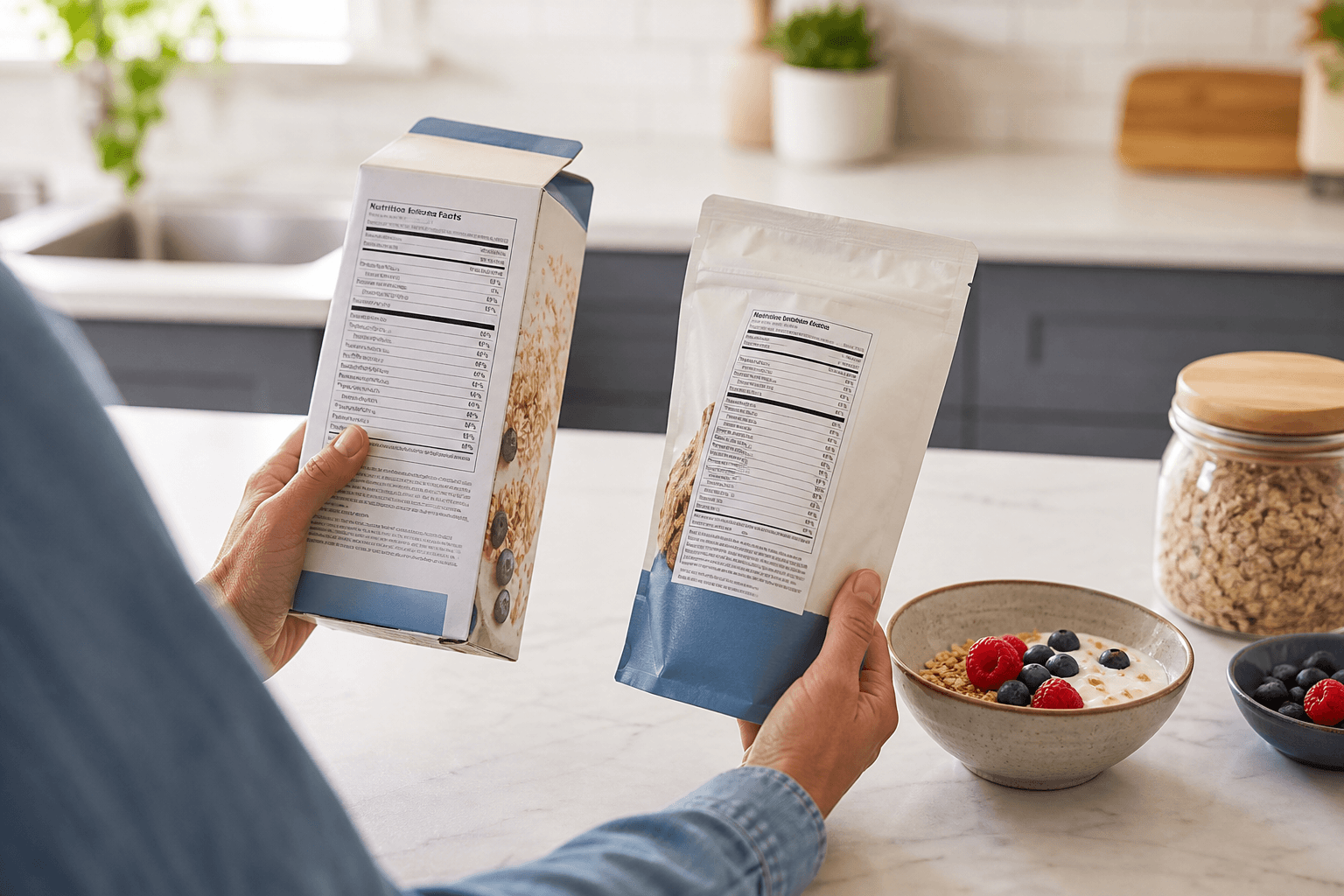
Useful health tools
Try one of our most searched health calculators.
BMI Calculator
Estimate body mass index from height and weight, with a plain-language category.
Daily Calorie Needs Calculator
Estimate maintenance calories and gentle weight-change ranges by activity level.
Sleep Calculator
Work backward from a wake-up time to estimate when to get into bed for an adult sleep target.
Quick answer: To read added sugar on a U.S. food label, check the serving size first, then find “Includes X g Added Sugars” beneath Total Sugars. The added-sugar grams are already part of Total Sugars, so do not add the two numbers together. Use % Daily Value to compare similar products, while considering the whole food and your usual portion.
A granola box can say “whole grain,” a yogurt can show fruit, and a drink can look natural while each label answers a more useful question: how much added sugar is in the portion you will actually have? This guide gives you a calm, repeatable label check. It does not ask you to fear fruit, dairy, celebration food, or every gram of sugar.
Why is it useful to read added sugar on food labels?
Current FDA and CDC guidance separates Total Sugars from Added Sugars on the U.S. Nutrition Facts label. Visible search results explain that distinction, serving size, ingredient names, and % Daily Value, but often stop before showing how to compare two realistic choices without turning one number into a verdict. The practical gap is a three-pass shelf check: portion, added sugar, then the food's wider nutritional role.
What does a real label comparison look like?
You are choosing between two flavored yogurts. One lists 14 grams Total Sugars and includes 8 grams Added Sugars; the other lists 11 grams Total Sugars and includes 5 grams Added Sugars. You compare equal serving sizes, remember that the added amount is included in the total, and then check protein, ingredients, price, taste, and what you will pair with it. You do not calculate 22 grams for the first yogurt.
What should you check before choosing?
- Read the serving size and servings per container before comparing any nutrient number.
- Find Total Sugars, then read the indented line that says how many grams are included as Added Sugars; never add those figures together.
- Use the added-sugar % Daily Value as context: FDA's general label guide treats 5% DV or less per serving as low and 20% DV or more as high.
- Compare like with like—similar serving sizes and similar foods—rather than comparing a tablespoon of sauce with a full bottle or plain yogurt with dessert.
- Scan the ingredient list to learn what sweeteners are present, but use the Nutrition Facts panel to quantify added sugar in a serving.
- Make the final choice using the whole food: fiber, protein, sodium, saturated fat, allergens, price, enjoyment, and how it fits the meal can all matter.
How do you read added sugar on food labels without double-counting?
Start at the top of the Nutrition Facts panel. The FDA says the values apply to the stated serving size. Under Total Carbohydrate, Total Sugars includes sugar naturally present in a food plus any sugar added during processing. The indented “Includes” line tells you how much of that total came from added sugars.
Think of it as a container: Total Sugars is the full amount, and Added Sugars is a part inside it. If a label says 14 grams Total Sugars and includes 8 grams Added Sugars, the total is 14—not 22. The remaining sugar may be naturally present in ingredients such as milk or fruit, but the label alone does not make the product good or bad.
What does the added sugar % Daily Value mean?
On U.S. labels, the Daily Value for added sugars is 50 grams for a 2,000-calorie reference diet. That is a label reference, not a personalized daily prescription. FDA explains that 5% DV or less per serving is considered low and 20% DV or more is considered high for a nutrient.
Use %DV to compare similar products quickly. If one cereal provides 6% DV and another provides 22% DV in the same serving size, that difference is meaningful information. It still does not tell you how much you will pour, what else you eat, or whether a lower-sugar option is affordable and enjoyable enough to use.
Can the ingredient list reveal hidden added sugars?
The ingredient list can show sugar, syrups, honey, dextrose, sucrose, concentrated fruit juice used as a sweetener, and other added-sugar ingredients. Ingredients are generally listed in descending order by weight. But counting sugar words does not calculate grams, because the list does not usually disclose the amount of each ingredient.
Use both panels for different jobs: the Nutrition Facts panel tells you grams and %DV per serving; the ingredient list tells you what is in the product and helps with allergens or preferences. A sweetener's natural-sounding name does not remove it from the added-sugar category.
How can you compare two products in 30 seconds?
Use this three-pass shelf check. First, match the serving sizes and estimate your realistic portion. Second, compare Included Added Sugars in grams and %DV. Third, check what matters for that food—fiber in cereal, protein in yogurt, sodium in sauce, or whether the drink replaces something more nourishing.
| Pass | Look for | Question to ask |
|---|---|---|
| 1. Portion | Serving size; servings per container | How much will I actually eat or drink? |
| 2. Sugar | Includes X g Added Sugars; %DV | Are these products comparable per serving? |
| 3. Whole food | Fiber, protein, sodium, saturated fat, ingredients, price | What job does this food do in my meal? |
For a fuller shopping system, use the site's healthy grocery guide on a tight budget. The food-label and budget guide to ultra-processed foods helps when processing language feels confusing, and the fiber-rich foods guide adds context beyond sugar alone.
Does zero added sugar mean a product is sugar-free or healthier?
No. A product can have zero added sugars while containing naturally occurring sugars, and “no added sugar” does not automatically mean low calorie, high fiber, low sodium, or suitable for every health condition. Conversely, a food with some added sugar may still contribute useful nutrients and fit comfortably into an overall eating pattern.
CDC recommends focusing on overall sources of added sugar, especially sugar-sweetened drinks and frequently eaten packaged foods. A practical goal is not to rank every food morally. Notice the repeat contributors in your own week, then decide whether a lower-added-sugar version, smaller portion, less frequent purchase, or unsweetened base you flavor yourself would actually work.
What changes outside the United States?
Label rules differ by country. The U.S. Nutrition Facts label specifically declares Added Sugars, while other systems may emphasize total sugars, sugars per 100 grams, or ingredient grouping. Do not transfer the U.S. 50-gram Daily Value or its panel wording to every country.
If your package does not show an Added Sugars line, use your national food regulator's guidance and the ingredient list. This article explains the current U.S. panel; international readers should verify local definitions and label formats before comparing products.
What common label-reading mistakes should you avoid?
- Adding Total Sugars and Added Sugars together, even though added sugars are included in the total.
- Ignoring serving size when the package contains more than one serving or your usual portion differs from the label serving.
- Assuming honey, maple syrup, agave, fruit-juice concentrate, or an organic sweetener does not count as added sugar when used as a sweetener.
- Treating naturally occurring sugar in whole fruit or plain milk as identical label information to added sugar.
- Choosing by a front-package phrase such as “natural,” “light,” or “made with fruit” without reading the Nutrition Facts panel.
- Trying to eliminate every added-sugar gram when a flexible pattern and a sustainable grocery budget are more useful.
When should you ask for personalized nutrition help?
Food labels support general choices; they do not prescribe a diet for diabetes, reactive hypoglycemia, kidney or heart disease, pregnancy, growth, sports nutrition, food allergy, malnutrition, or an eating-disorder history. Ask a registered dietitian or qualified clinician for individualized targets when food rules, glucose symptoms, unintended weight change, restrictive eating, or a medical condition complicates the decision. Seek urgent care for severe low-blood-sugar symptoms or another medical emergency according to your existing care plan.
Questions this guide answers
These are the practical questions readers usually bring to this topic. The short answers below are intentionally direct, and the surrounding sections explain the context, cautions, and when professional guidance matters.
Are added sugars included in total sugars?
Yes. On a U.S. Nutrition Facts label, Total Sugars includes both naturally occurring and added sugars. The “Includes X g Added Sugars” line is a subset, not an extra amount.
What is considered high added sugar on a label?
FDA's general guide calls 20% Daily Value or more per serving high and 5% DV or less low. Use those as label-comparison guides, not individualized medical targets.
Does fruit sugar count as added sugar?
Sugar naturally present in whole fruit is not added sugar. Concentrated fruit juice used as a sweetener can count as added sugar under FDA definitions, depending on how it is used.
Is honey an added sugar?
Honey counts as added sugar when it is added to a food or drink. A single-ingredient honey package has special label formatting, but consuming it still contributes added sugar to the diet.
Should people with diabetes only check sugar grams?
No. Carbohydrate amount, serving size, medications, activity, and the whole meal can affect glucose. Follow your diabetes care plan and ask your clinician or dietitian how to use labels for your needs.
Sources
Health Wellness Daily uses current food-regulator, public-health, and professional-body sources to support nutrition claims. Sources reviewed for this article include:
- FDA: Added Sugars on the Nutrition Facts Label
- FDA: How to Understand and Use the Nutrition Facts Label
- FDA: Daily Value on Nutrition and Supplement Facts Labels
- CDC: Be Smart About Sugar
- CDC: Spotting Hidden Sugars in Everyday Foods
- National Institute on Aging: How to Read Food and Beverage Labels
- American Heart Association: Sugar 101
By Lalit S · Researched and sourced, not medical advice · Last reviewed 2026-08-22
A note before we start: I'm not a medical professional. This is a researched, plain-language guide with every health claim linked to a credible source so you can check it and bring it to your own doctor. It's for general education — not a diagnosis, and not a substitute for care from someone who knows your history.
How this article was made: I researched current guidance from the sources above, drafted with AI assistance, and fact-checked every claim against its source before publishing. I'm not a medical professional — corrections from clinicians are welcome at contact@healthwellnesdaily.com.
Medical disclaimer: This content is for general information only and is not medical advice. Always consult a qualified healthcare professional about your own symptoms.


Comments
Verified readers can comment. New comments are reviewed before they appear.