Are Frozen Vegetables as Healthy as Fresh?
Frozen vegetables can be as healthy as fresh vegetables. Nutrient levels vary by vegetable, storage time, processing, and cooking method, so fresh does not always win and frozen does not always win. Choose plain vegetables you enjoy, check sauces and sodium, cook them well, and use the form you will reliably eat before it spoils.
 Lalit SSeptember 18, 202610 min read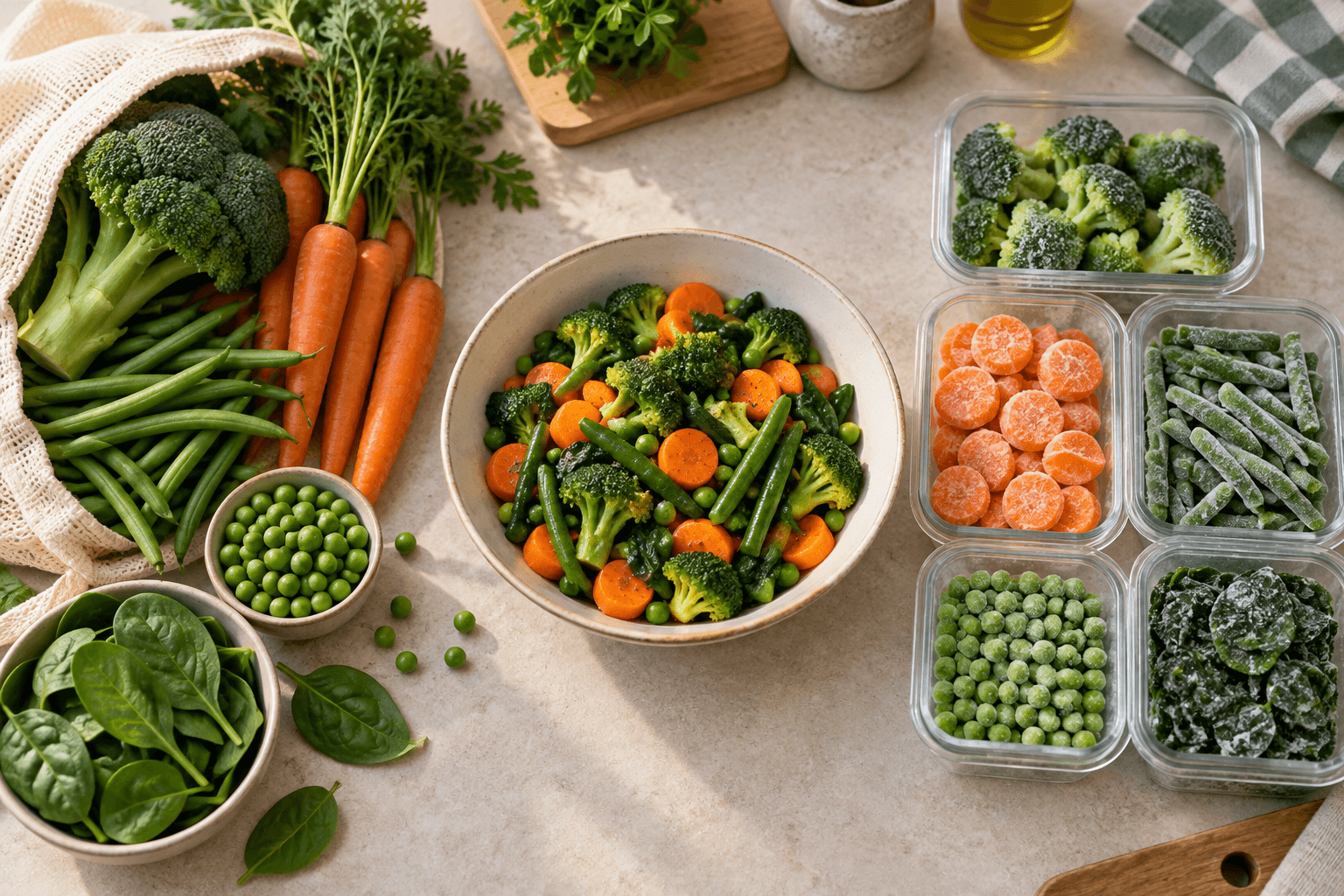
Useful health tools
Try one of our most searched health calculators.
BMI Calculator
Estimate body mass index from height and weight, with a plain-language category.
Daily Calorie Needs Calculator
Estimate maintenance calories and gentle weight-change ranges by activity level.
Sleep Calculator
Work backward from a wake-up time to estimate when to get into bed for an adult sleep target.
Quick answer: Frozen vegetables can be as healthy as fresh vegetables. Nutrient levels vary by vegetable, storage time, processing, and cooking method, so fresh does not always win and frozen does not always win. Choose plain vegetables you enjoy, check sauces and sodium, cook them well, and use the form you will reliably eat before it spoils.
You reach the freezer aisle, see a low-priced bag of broccoli, and wonder whether convenience means a nutritional downgrade. For most everyday meals, it does not. Current CDC guidance says frozen vegetables can be just as nutritious as fresh, while comparative research shows that the exact result depends on the vegetable and nutrient. The more useful question is which form fits the meal, label, budget, storage time, and texture you want.
Why is the frozen-versus-fresh question worth asking differently?
Visible results repeatedly compare nutrient retention, storage, cost, shelf life, and canned alternatives, but often stop at a quick verdict. This guide adds a label-to-freezer-to-pan decision card and shows why cooking, texture, safety, and waste can matter more than declaring one form universally superior.
How can two sensible shoppers choose differently?
Maya buys fresh spinach for salads and frozen spinach for curries, but half the fresh bag wilts. Her neighbor prefers crisp roasted broccoli yet keeps frozen peas for quick dinners. Both choices are sensible because the meal, texture, timing, and likely waste differ.
What should you check before choosing fresh or frozen vegetables?
- Start with the ingredient list. A plain bag should list the vegetable; blends may include salt, butter, cheese, sugar, or sauce that changes the comparison.
- Match the form to the job. Fresh can suit salads, crunchy snacks, and high-heat roasting; frozen often works well in soups, curries, stir-fries, pasta, omelets, and blended dishes.
- Compare realistic waste, not only shelf price. A slightly cheaper fresh vegetable is not cheaper if much of it spoils before you cook it.
- Follow the package cooking directions. Some frozen vegetables are labeled raw or not ready to eat and should not be treated like a washed salad ingredient.
- Use a cooking method that limits long water exposure when practical. Steaming, microwaving, quick sautéing, or adding vegetables near the end of a soup can protect texture and reduce losses into discarded cooking water.
- Keep variety in the week. Color, type, and repeat use matter more than proving that every frozen pea or fresh carrot has the highest possible level of one nutrient.
Are frozen vegetables as healthy as fresh vegetables?
Often, yes. CDC guidance says frozen or canned vegetables and fruits can be just as nutritious as fresh varieties. A comparative study of eight fruits and vegetables found that minerals, fiber, and total phenolics were not significantly different for most of the fresh and frozen samples tested. That supports a flexible answer, not a claim that every frozen vegetable is identical to every fresh one.
Nutrient retention varies with the crop, variety, time after harvest, blanching, frozen storage, refrigeration, and cooking. Some water-soluble vitamins are more sensitive to heat and water; fiber and many minerals are more stable. A fresh vegetable eaten soon after harvest may differ from one stored for days, while frozen vegetables are commonly blanched before freezing. The overall meal pattern matters more than chasing a universal winner.
Use the label–freezer–pan decision card
Run this check in less than a minute. It favors the vegetable you can store and prepare safely, not a prestige label.
| Check | Fresh choice | Frozen choice |
|---|---|---|
| Ingredients | The vegetable itself; note any pre-cut seasoning | Prefer plain when you want control; check sauce, salt, butter, or sugar |
| Meal fit | Salad, crudités, crisp roasting, fresh garnish | Soup, curry, pasta, omelet, stir-fry, mash, smoothie |
| Timing | Will you cook it before quality drops? | Is there freezer space, and will the bag reseal? |
| Texture | Choose when snap or raw crunch matters | Choose when softness or blending is acceptable |
| Safety | Wash and prepare appropriately | Read and follow cooking directions; do not assume ready-to-eat |
| Waste | Buy only the amount your plan uses | Pour out the portion needed and return the rest promptly |
What should you check on a frozen vegetable label?
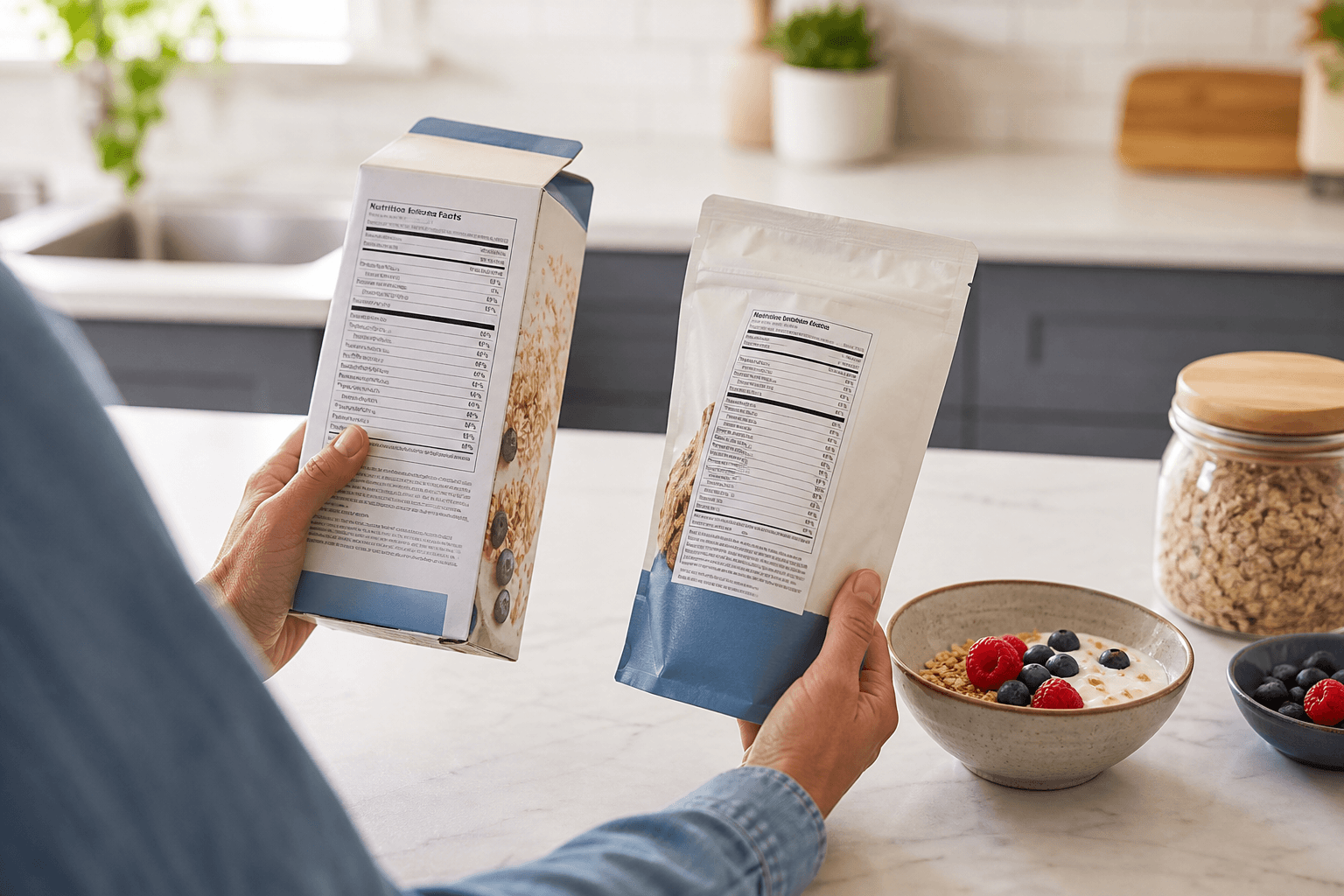
Turn the bag over. Plain broccoli, peas, spinach, carrots, or mixed vegetables make comparison simple. Products with cheese sauce, butter, breading, glaze, or seasoning may still fit your meal, but they are a different product. CDC budget guidance recommends skipping added butter or cream sauces when you want a straightforward vegetable and checking for added salt or sugar.
Compare serving sizes before comparing sodium or other nutrients. FDA sodium guidance specifically suggests fresh or frozen vegetables without sauce or seasoning when reducing sodium. For a broader shopping routine, use the site's three-pass Nutrition Facts label check and the realistic packaged-food guide without turning processing into a moral score.
Does cooking matter more than fresh versus frozen?
Cooking changes texture and nutrient availability in both fresh and frozen vegetables. A review indexed in PubMed found that long exposure to high heat or water, such as prolonged boiling, can be especially hard on some nutrients, while steaming or microwaving may retain more water-soluble nutrients. No method preserves every compound perfectly, and cooking can also make vegetables easier to eat and use.
For better frozen texture, avoid crowding a roasting pan, use a hot pan for sautéing, and do not thaw unless the recipe or package calls for it. If you boil vegetables, using the cooking liquid in soup or sauce keeps what has moved into the water. Choose the method that makes the vegetables appealing enough to return to the meal.
Are frozen vegetables cheaper and less wasteful?
They can be, but local price, season, package size, electricity, and cooking access all matter. CDC notes that frozen options can cost less, last longer, and let you use part of a resealable package. That can help a one-person household, a family with an unpredictable schedule, or anyone whose fresh produce regularly spoils.
Compare cost per usable portion. For example, a large fresh cauliflower may be good value for a planned roast, while frozen florets may be better for two quick curries weeks apart. The site's budget grocery guide helps turn this into meals, and the fiber-rich food guide shows how vegetables can sit alongside beans, whole grains, fruit, nuts, and seeds.
What food-safety detail do people miss?
Frozen does not automatically mean ready to eat. FoodSafety.gov advises reading package instructions because some frozen vegetables are raw or labeled not ready to eat and may require thorough cooking. Follow the product directions, especially for children, older adults, pregnancy, or anyone with a weakened immune system.
Return the unused portion to the freezer promptly. If a power outage or thawing event raises doubt, use official food-safety guidance rather than tasting the product to test it.
What common fresh-versus-frozen mistakes should you avoid?
- Assuming the word frozen describes the whole product; breading, cream sauce, butter, salt, or seasoning can change its nutrition profile.
- Comparing raw fresh vegetables with cooked frozen vegetables as if preparation had no effect.
- Boiling vegetables for a long time, discarding the water, and blaming freezing alone for nutrient or texture loss.
- Letting an aspirational fresh-produce haul spoil while overlooking a plain frozen option you would actually cook.
- Eating frozen vegetables straight from the bag without checking whether the package requires cooking.
- Treating one laboratory study as proof that every vegetable and every nutrient behaves the same way.
When should you ask for personalized nutrition or medical help?
Food form usually does not require medical advice, but your health context may change the best product. Ask a clinician or registered dietitian for individualized guidance if you have kidney disease and potassium limits, heart failure or another sodium restriction, diabetes medicines that make major meal changes important, swallowing problems, severe food allergy, or a prescribed therapeutic diet. Seek medical care for signs of a serious allergic reaction or foodborne illness rather than trying to solve them by switching between fresh and frozen vegetables.
Questions this guide answers
These are the practical questions readers usually bring to this topic. The short answers below are intentionally direct, and the surrounding sections explain the context, cautions, and when professional guidance matters.
Do frozen vegetables lose nutrients?
Some nutrients can change during blanching, freezing, storage, and cooking, just as fresh vegetables can change during transport, refrigeration, and cooking. The amount depends on the vegetable and nutrient, so frozen vegetables should not be dismissed as nutritionally empty.
Are frozen vegetables processed food?
Yes, freezing and often blanching are forms of processing. That label alone does not tell you whether a product fits your diet; check the ingredient list and Nutrition Facts, especially for sauces, salt, butter, breading, or sugar.
Do you need to wash frozen vegetables?
Follow the package directions rather than applying one rule to every product. Some frozen vegetables are labeled raw or not ready to eat and need cooking; rinsing is not a substitute for required cooking.
Is it better to steam or microwave frozen vegetables?
Both can be practical methods with limited water exposure. Time, texture, vegetable type, and package instructions matter, so use the shortest method that cooks the food safely and gives a texture you enjoy.
Can you eat frozen vegetables every day?
Plain frozen vegetables can be part of an everyday eating pattern. Keep variety across vegetable types and colors, and adapt choices to allergies, medical diets, budget, culture, and what you reliably enjoy.
Sources
Health Wellness Daily uses current public-health, food-safety, regulator, clinical, and peer-reviewed sources to support nutrition claims. Sources reviewed for this article include:
- CDC: Tips for increasing vegetables and fruits
- CDC: Healthy eating tips
- CDC: Six tips for eating healthy on a budget
- FDA: Sodium in your diet
- FoodSafety.gov: Use food safety to cook easy meals
- PubMed: Mineral, fiber, and phenolic retention in fresh and frozen produce
- PubMed: Cooking at home to retain nutritional quality
- Cleveland Clinic: Fresh, frozen, and canned vegetables
By Lalit S · Researched and sourced, not medical advice · Last reviewed 2026-09-18
A note before we start: I'm not a medical professional. This is a researched, plain-language guide with every health claim linked to a credible source so you can check it and bring it to your own doctor. It's for general education — not a diagnosis, and not a substitute for care from someone who knows your history.
How this article was made: I researched current guidance from the sources above, drafted with AI assistance, and fact-checked every claim against its source before publishing. I'm not a medical professional — corrections from clinicians are welcome at contact@healthwellnesdaily.com.
Medical disclaimer: This content is for general information only and is not medical advice. Always consult a qualified healthcare professional about your own symptoms.


Comments
Verified readers can comment. New comments are reviewed before they appear.