Walking Pad Workout: A Beginner Safety Plan
A walking pad can help you replace some desk sitting with easy indoor walking, but it is not automatically a full workout or a safe fit for every person or task. Start off the machine, clear the area, use the manufacturer's limits and controls, walk slowly without multitasking, and add simple work only after your balance feels steady.
 Lalit SOctober 13, 202611 min read
Useful health tools
Try one of our most searched health calculators.
BMI Calculator
Estimate body mass index from height and weight, with a plain-language category.
Daily Calorie Needs Calculator
Estimate maintenance calories and gentle weight-change ranges by activity level.
Sleep Calculator
Work backward from a wake-up time to estimate when to get into bed for an adult sleep target.
Quick answer: A walking pad can help you replace some desk sitting with easy indoor walking, but it is not automatically a full workout or a safe fit for every person or task. Start off the machine, clear the area, use the manufacturer's limits and controls, walk slowly without multitasking, and add simple work only after your balance feels steady.
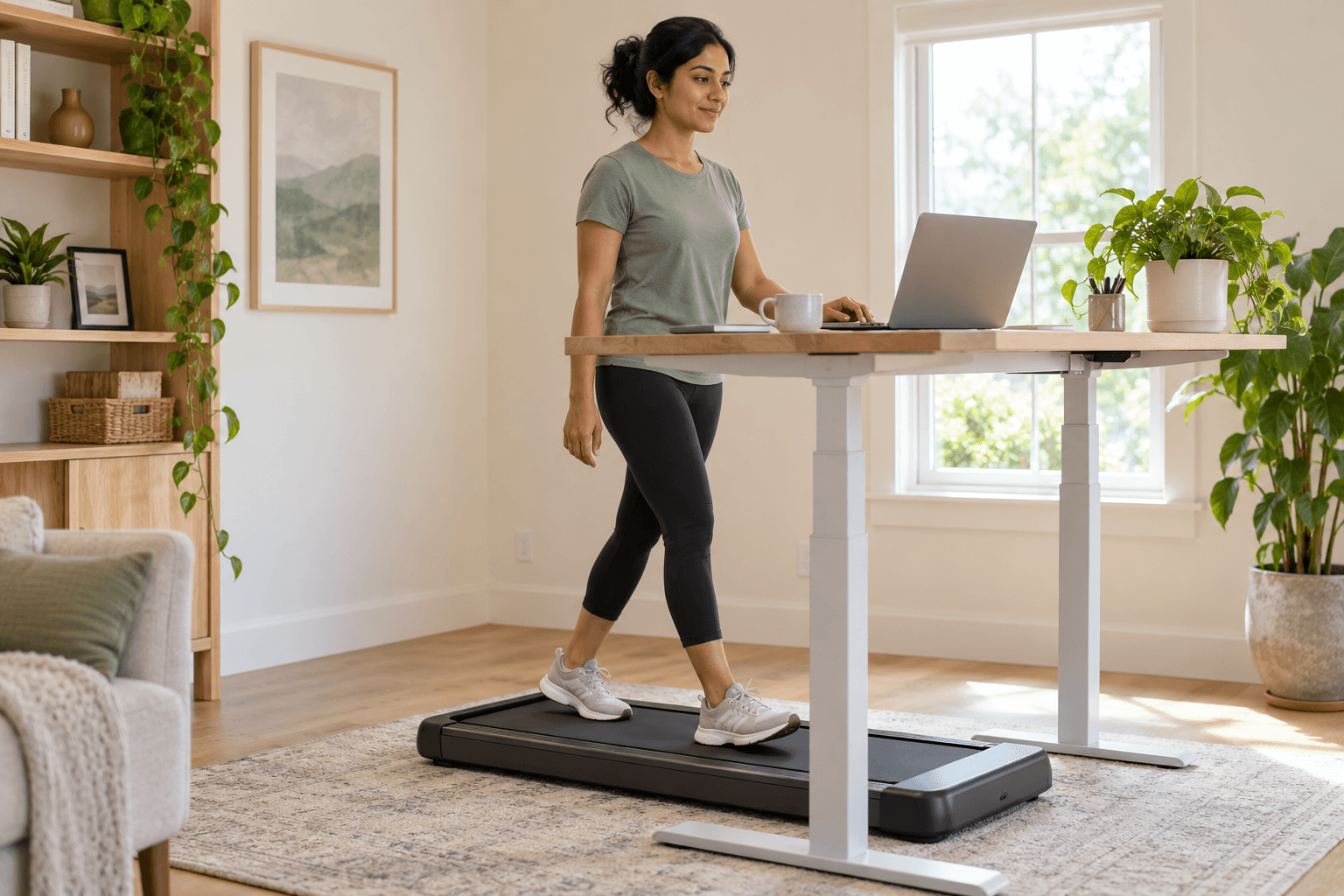
A walking pad workout looks almost frictionless online: slide the belt under a desk, open a laptop, and collect steps while you work. The useful version is less glamorous. A compact treadmill may help you sit less and add light movement, but the moving surface, missing handrails on many models, divided attention, desk setup, and people or pets nearby all change the safety calculation. Your first goal is not a step record. It is a calm, repeatable trial.
Why does a walking pad workout need a beginner plan?
Visible search results repeatedly compare walking pads with treadmills, list convenience and calorie-burning benefits, and recommend them for home offices. Recent results also emphasize product rankings. The recurring gap is a non-commercial way to decide whether the device fits your balance, room, work tasks, noise limits, and broader activity plan. This guide adds a floor-to-task safety ladder and a seven-day trial card while keeping the evidence honest: active workstations can reduce occupational sitting, but the certainty of evidence is limited and walking while typing may reduce fine-motor performance.
How can two walking-pad plans need different answers?
Priya wants movement during remote-work days. She first leaves the laptop closed, uses a slow setting, and practices starting and stopping. Later she walks while listening to a meeting but sits for precise spreadsheet work. Her father has recent falls and feels unsteady without support, so he asks a physical therapist about a safer indoor option. The same device does not create the same plan.
How should a beginner start a walking pad workout?
- Read the manual first. Confirm the user-weight limit, permitted footwear and surface, startup sequence, speed range, stop controls, maintenance, and storage rules for your model.
- Clear the moving area. Keep cords, furniture, rugs, equipment, children, and pets away from the belt and rear roller, with room to step off safely.
- Set the desk before the belt moves. Keep the screen near eye level and the keyboard and mouse close enough that you do not reach or lean.
- Make the first sessions walking-only. Start at the lowest comfortable speed, learn the belt response, practice stopping, and step on or off as the manufacturer directs.
- Add tasks gradually. Listening or a simple call may come before reading, typing, spreadsheets, hot drinks, or work requiring close attention.
- Let symptoms and form—not a step target—end the session. Stop for imbalance, dizziness, chest discomfort, unusual breathlessness, new pain, numbness, or an awkward gait.
- Keep a wider weekly plan. Easy pad walking can reduce sitting, but strength, balance, moderate aerobic activity, recovery, and accessibility still need attention.
What can a walking pad workout realistically do?
A walking pad is a compact motorized walking surface, often designed for low-speed use and sometimes for placement under a standing desk. Its clearest practical use is replacing part of a seated period with light walking. Current U.S. guidance says adults should move more and sit less, and any amount of moderate or vigorous activity can provide some benefit.
That does not make every pad session moderate exercise. Intensity depends on your relative effort, and very slow work walking may remain light activity. A walking pad also does not train every major muscle group or balance challenge. Place it inside the site's whole-week movement plan, not above it.
What does the treadmill-desk evidence actually show?
A network meta-analysis of 23 randomized trials found that treadmill workstations paired with promotion appeared to reduce occupational sedentary time compared with a typical desk, but the authors rated the overall certainty of evidence as low. That supports a cautious claim about sitting time—not a promise of weight loss, disease prevention, or improved productivity for one buyer.
Work performance is mixed. A separate meta-analysis found treadmill desks reduced typing speed, while selective attention did not show a clear decline. The practical conclusion is to match the task to the movement. Listening may work well; detailed editing, precise mouse work, confidential calls, or a difficult decision may be better seated.
Use the floor-to-task beginner ladder
Advance only when the current level feels steady. There is no prize for reaching the last row.
| Level | Try | Move on when |
|---|---|---|
| 0: Room | Machine off; read manual, clear space, place controls | You can reach stop controls and exit space is clear |
| 1: Belt | Walking only at the lowest comfortable speed | Starts, stops, and foot placement feel predictable |
| 2: Attention | Short walk while looking forward; no screen task | Posture and stride stay relaxed |
| 3: Listen | Audio, passive meeting, or familiar video | You can stop promptly without distraction |
| 4: Light work | Brief reading or simple speaking task | No leaning, missteps, or rushed gait |
| 5: Decide | Keep only tasks that remain safe and accurate | Walking helps the day rather than competing with work |
How should you set up an under-desk walking pad?
Use a firm, level surface that the manufacturer allows. Give the belt and rear roller the clearances in the manual, route power cords away from feet and moving parts, and keep the stop control immediately available. CPSC treadmill safety notices underline the danger of children, pets, and objects near a moving belt; when the machine is not in use, follow the maker's shutdown, unplugging, key, and storage instructions.
At the desk, avoid reaching forward or looking down continuously. If the work surface shakes, the screen forces your neck down, the desk edge blocks your stride, or the cord crosses the exit path, stop and fix the setup. Never balance a hot drink over the moving belt.
How long and how fast should a beginner walk?
There is no evidence-based universal walking-pad speed or session length for every beginner. Device dimensions, balance, footwear, work task, fitness, pain, medicines, and health conditions all change the answer. Begin with a short exposure at the lowest comfortable speed allowed by the manual and stop while your walking still looks and feels controlled.
Increase one variable at a time: first familiarity, then a little time, and only then speed or task complexity. If you are returning after inactivity, use the site's two-week exercise restart check. If you want moderate cardio, the talk-test guide explains why intensity cannot be read from belt speed alone.
Try a seven-day decision card before you buy or commit
If possible, test a borrowed, workplace, gym, or returnable device without stretching the trial beyond the seller's terms. Record facts, not estimated calories.
| Lane | Record | Decision question |
|---|---|---|
| Access | Setup and storage effort | Will you use it without creating a trip hazard? |
| Body | Balance, feet, joints, back, fatigue, symptoms | Does easy walking remain comfortable? |
| Task | Listening, calls, reading, typing | Which tasks stay accurate and calm? |
| Room | Noise, vibration, heat, cords, clearance | Does it fit the household and workspace? |
| Use | Minutes used and sitting replaced | Is it becoming a routine rather than furniture? |
| Alternative | Hallway laps, outdoor walk, desk breaks | Would a no-cost option solve the same problem? |
The site's short movement-break guide offers equipment-free alternatives. Do not buy a machine to solve a problem that a recurring two-minute walk already solves well.
Who may need another option or professional advice?
Many people can be active with a disability or chronic condition, but the right type and amount may need adaptation. MedlinePlus advises checking with a healthcare provider when trouble moving or balancing makes exercise safety uncertain, and CDC recommends individualized guidance for chronic conditions and disabilities.
A pad without rails may be a poor fit when you need external support, cannot reliably feel your feet, have recent falls, or cannot get on and off safely. A physical therapist may suggest overground walking, a supported treadmill, seated pedaling, accessible wheeling, or another plan. Adaptation is not failure; it is the exercise decision working as intended.
What common walking-pad mistakes should you avoid?
- Opening email and typing before learning how the belt starts, stops, and feels underfoot.
- Choosing speed from a social-media routine instead of balance, gait, attention, and the device manual.
- Treating a high step count as proof of a complete exercise program or guaranteed weight loss.
- Walking barefoot, in loose slippers, or in footwear that the manufacturer says not to use.
- Letting children, pets, cords, balls, chairs, or stored objects enter the front, side, or rear clearance area.
- Using the desk edge as a substitute handrail when you already feel unsteady.
- Continuing through chest symptoms, faintness, unusual breathlessness, balance loss, or worsening pain to finish a meeting or goal.
When should you stop and seek medical advice?
Ask a clinician or physical therapist before using a walking pad if you have recent falls, fainting, unexplained dizziness, significant balance or vision difficulty, foot numbness or wounds, a condition that changes gait, recent surgery or injury, pregnancy-related restrictions, or chest or breathing symptoms with activity. Stop and seek urgent medical care for chest pressure, fainting, severe or unusual shortness of breath, sudden weakness, a serious fall or head injury, or another symptom that feels dangerous. A device cannot make those symptoms safe.
Questions this guide answers
These are the practical questions readers usually bring to this topic. The short answers below are intentionally direct, and the surrounding sections explain the context, cautions, and when professional guidance matters.
Is a walking pad workout good exercise?
It can add light activity and replace some sitting. Whether it reaches moderate intensity depends on your effort, and it does not automatically replace strength, balance, or a broader weekly activity plan.
How long should a beginner use a walking pad?
There is no universal beginner duration. Start with a short walking-only trial at the lowest comfortable speed allowed by the manual, stop before form or attention declines, and build one variable at a time.
Can you use a walking pad while working?
Some people can safely pair slow walking with listening or simple calls. Research suggests typing speed can fall, so add tasks gradually and sit for work that needs precise mouse control, close reading, hot drinks, or full attention.
Do walking pads help with weight loss?
A walking pad may increase movement, but no device guarantees weight loss. Body weight is influenced by many factors, and the evidence on treadmill desks supports cautious conclusions about sitting time rather than a promised result.
Who should not use a walking pad?
People with recent falls, fainting, significant balance or vision difficulty, foot numbness or wounds, gait changes, or concerning activity symptoms should get individualized advice first. A model without suitable support may not be appropriate.
Sources
Health Wellness Daily uses current government guidance, consumer-safety information, clinical education, and peer-reviewed research to support health and safety claims. Sources reviewed for this article include:
- CDC: Adult physical activity overview
- ODPHP: Physical Activity Guidelines questions and answers
- MedlinePlus: Exercise and physical fitness
- CDC: Physical activity for chronic conditions and disabilities
- PubMed: Active workstations and sedentary time network meta-analysis
- PubMed: Treadmill desks, work performance, and cognition meta-analysis
- Cleveland Clinic: Walking pads and treadmills
- CPSC: Treadmill child and object safety precautions
By Lalit S · Researched and sourced, not medical advice · Last reviewed 2026-10-13
A note before we start: I'm not a medical professional. This is a researched, plain-language guide with every health claim linked to a credible source so you can check it and bring it to your own doctor. It's for general education — not a diagnosis, and not a substitute for care from someone who knows your history.
How this article was made: I researched current guidance from the sources above, drafted with AI assistance, and fact-checked every claim against its source before publishing. I'm not a medical professional — corrections from clinicians are welcome at contact@healthwellnesdaily.com.
Medical disclaimer: This content is for general information only and is not medical advice. Always consult a qualified healthcare professional about your own symptoms.


Comments
Verified readers can comment. New comments are reviewed before they appear.