Why Do My Legs Feel Restless at Night?
Restless legs at night may fit a specific pattern: an urge to move that starts or worsens while resting, improves briefly with movement, and is stronger in the evening or at night. That pattern deserves a clinician-led review when it disrupts sleep. Do not assume cramps, start iron, or change medicine from one symptom alone.
 Lalit SOctober 20, 202611 min read

Useful health tools
Try one of our most searched health calculators.
BMI Calculator
Estimate body mass index from height and weight, with a plain-language category.
Daily Calorie Needs Calculator
Estimate maintenance calories and gentle weight-change ranges by activity level.
Sleep Calculator
Work backward from a wake-up time to estimate when to get into bed for an adult sleep target.
Quick answer: Restless legs at night may fit a specific pattern: an urge to move that starts or worsens while resting, improves briefly with movement, and is stronger in the evening or at night. That pattern deserves a clinician-led review when it disrupts sleep. Do not assume cramps, start iron, or change medicine from one symptom alone.
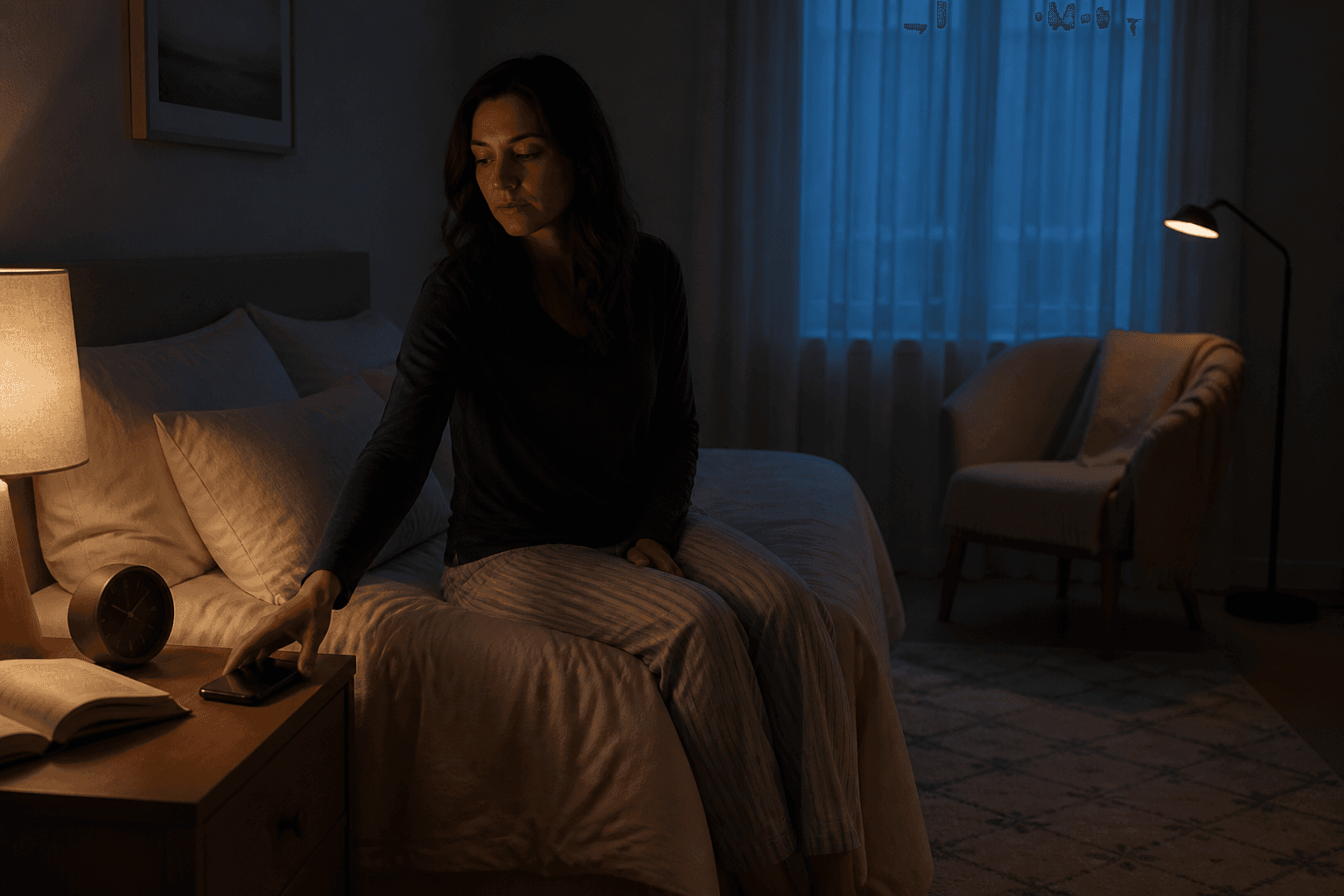
You settle into bed, then feel a hard-to-name pull, crawl, tingle, ache, or inner restlessness that makes you move your legs. Walking helps, but only for a while. The question “why do my legs feel restless at night?” cannot be answered by sensation alone. The useful first step is to record four features—urge, rest, relief, and evening timing—then add sleep impact, medicines, pregnancy, and health context for a clinician to interpret.
Why do my legs feel restless at night?
The word restless can describe several different experiences. Note whether you feel an urge to move, whether resting brings it on, whether movement helps, and when it happens. Those details can help a clinician distinguish an urge-to-move pattern from cramps or other problems without assuming that every uncomfortable leg is restless legs syndrome.
How can two nighttime leg patterns need different responses?
Anika notices a crawling feeling in both legs after she lies down; getting up helps briefly, and the pattern has delayed sleep three nights this week. She records the timing and books an appointment. Her brother wakes with one calf tightened into a painful knot that remains sore after the spasm ends. He records it as a cramp pattern rather than borrowing her label. Their symptoms share a bedtime, but the urge, pain, movement response, and after-effects differ.
What should you track before your appointment?
- Describe the sensation before naming it: urge to move, crawling, pulling, tingling, burning, aching, tight knot, numbness, pain, or visible twitching. Record whether it is one-sided or both-sided and whether the feeling is deep in the limb or on the skin.
- Check what happens at rest. Note whether sitting through a film, a long journey, or lying in bed starts or worsens the feeling. Restless legs syndrome is a clinical diagnosis; this feature supports a conversation but does not prove it.
- Test only ordinary movement, not strenuous exercise. Record whether walking, stretching, rubbing, or changing position brings clear but temporary relief, no change, or worse pain.
- Track time and sleep impact for one to two weeks: onset, bedtime, time to fall asleep, awakenings, and next-day sleepiness. Stop if tracking increases sleep anxiety.
- List prescriptions, over-the-counter sleep or allergy products, supplements, caffeine, nicotine, and alcohol, including timing and recent changes. Ask a prescriber or pharmacist to review the list; do not stop medicine on your own.
- Add health context that can guide testing: pregnancy, heavy menstrual bleeding or another possible source of iron loss, kidney disease, diabetes, nerve symptoms, and family history. Context is not a self-diagnosis.
- Arrange an appointment when the pattern is frequent, worsening, begins after a medicine change, or interferes with sleep, travel, work, or mood. Ask whether an exam, iron studies, or evaluation for another sleep or nerve condition fits your history.
Does this pattern sound like restless legs syndrome?
NIH and MedlinePlus describe a characteristic cluster: an urge to move the legs, often with uncomfortable sensations; symptoms that begin or worsen during sitting or lying down; temporary relief with movement; and greater intensity in the evening or at night. A clinician also checks whether another condition better explains the symptoms.
People use words such as crawling, pulling, tingling, burning, or aching. The pattern matters more than the perfect adjective. Visible jerking during sleep is not the same as the awake urge to move, although both can occur together. If the main problem is waking with head pain rather than an urge to move, the site's morning-headache tracker covers a different sleep-related pattern.
How are restless legs, leg cramps, and nerve symptoms different?
This comparison is a description aid, not a home diagnostic test.
| Feature | Restless-leg pattern | Night cramp pattern | Nerve-type pattern |
|---|---|---|---|
| Main feeling | Urge to move with hard-to-name discomfort | Sudden painful tightening or hard muscle | Burning, numbness, pins and needles, or altered sensation |
| Timing | Worse at rest and usually evening/night | Sudden episode, often in calf or foot | May persist beyond rest or nighttime |
| Movement | Often helps temporarily while moving | Gentle stretch may release the spasm | May not reliably relieve it |
| Afterward | Urge may return when rest resumes | Muscle can remain sore | Numbness or weakness may remain |
| Next step | Record urge–rest–relief–time pattern | Record location, duration, soreness, triggers | Arrange assessment when new, persistent, painful, or weak |
A new swollen, red, warm, or severely painful leg does not belong in this comparison card; it needs prompt assessment.
Use an urge–rest–relief–time card
Use one row per episode for seven to fourteen days. The goal is a clearer appointment, not a score that confirms RLS.
| Lane | What to write | Why it helps |
|---|---|---|
| Urge and sensation | Need to move; crawl, pull, ache, burn, tingle, knot, numbness | Separates the urge from pain or sensory loss |
| Rest trigger | Sitting, journey, sofa, bed; minutes until onset | Captures whether inactivity matters |
| Relief | Walk, stretch, rub, position; complete, partial, none; how long | Shows the movement response |
| Time | Day or evening; bedtime; awakenings | Captures the daily pattern |
| Impact | Sleep delay, missed activity, travel difficulty, daytime sleepiness | Shows clinical significance |
| Context | Medicines, caffeine, alcohol, pregnancy, bleeding, kidney or nerve history | Supports a safer review |
Why might a clinician ask about iron and medicines?
Restless legs syndrome can occur without an identified cause, but NIH guidance notes associations with iron deficiency and other medical conditions. The current American Academy of Sleep Medicine guideline advises regular iron studies for clinically significant RLS because treatment decisions use ferritin and transferrin saturation in a way that differs from the general population.
That is a reason to ask about testing, not to buy iron first. Iron can cause side effects, interact with medicines, and become harmful in excess. A clinician may also review products that can worsen restlessness for some people and decide whether a change is appropriate. Do not abruptly stop a prescription or rely on an over-the-counter sleep product as a diagnostic test. The site's magnesium comparison explains why a supplement name alone does not establish that it fits the symptom or the person.
What can you try safely while waiting for an appointment?
MedlinePlus and NHS guidance include regular sleep habits, moderate daytime activity, relaxation, and reducing triggers such as caffeine, alcohol, nicotine, or sleep loss when those clearly affect symptoms. Gentle walking, stretching, massage, warmth, or coolness may provide short-term comfort for some people, but none confirms the diagnosis. The site's seven-day sleep-hygiene reset can help you test routine changes without treating them as a cure.
Change one low-risk variable at a time and record the response. The site's middle-of-the-night reset can help you avoid clock-watching if symptoms wake you, while the unrefreshing-sleep tracker captures daytime impact. If worry about symptoms keeps the mind active, use the racing-thoughts reset as a separate wind-down tool. If a supplement is tempting, use the sleep-supplement label and interaction checklist before discussing it with a clinician or pharmacist.
What common restless-leg mistakes should you avoid?
- Calling every nighttime leg symptom restless legs syndrome; cramps, positional discomfort, nerve symptoms, swelling, injury, circulation problems, and medication-related restlessness can feel different and need different evaluation.
- Starting iron because an article mentions low iron. Too much iron can be harmful, and current sleep-medicine guidance ties iron treatment decisions to properly collected blood tests and clinical context.
- Assuming magnesium, a detox, or one sleep supplement is a universal fix. Evidence and safety depend on the actual problem, dose, medicines, pregnancy, and kidney function.
- Stopping an antidepressant, antipsychotic, antihistamine, anti-nausea medicine, or other prescription abruptly because symptoms appeared after it. Bring timing to the prescriber instead.
- Using exhausting late-night exercise to chase temporary relief; strenuous activity close to bedtime may worsen sleep or symptoms for some people.
- Waiting for a tracker when one leg is newly swollen, red, warm, or severely painful, or when weakness, numbness, chest pain, shortness of breath, fainting, or another urgent symptom appears.
When should restless legs at night get medical care?
Book a clinical appointment if the urge-to-move pattern repeatedly delays or interrupts sleep, affects daytime function, appears during pregnancy, worsens, spreads, or follows a medicine change. Seek prompt care for new persistent numbness, weakness, walking difficulty, severe pain, fever, skin changes, or symptoms after an injury. One-sided swelling, warmth, redness, or tenderness needs urgent assessment, especially with recent surgery, immobility, pregnancy, or prior clots. Chest pain, sudden shortness of breath, coughing blood, fainting, or new severe neurologic symptoms require emergency help. Do not use temporary relief from walking to rule out an urgent condition.
Questions this guide answers
These are the practical questions readers usually bring to this topic. The short answers below are intentionally direct, and the surrounding sections explain the context, cautions, and when professional guidance matters.
Why do my legs feel restless only at night?
A restless-legs pattern typically becomes stronger in the evening or at night and appears during rest. Night timing alone is not diagnostic, so record the urge, rest trigger, movement response, and other symptoms.
How can I tell restless legs from a leg cramp?
Restless legs usually creates an urge to move with discomfort that improves while moving. A cramp is more often a sudden painful muscle tightening that may leave soreness afterward; persistent or severe symptoms need assessment.
Does low iron cause restless legs?
Low iron can be associated with RLS, but symptoms cannot show your iron status. Ask a clinician whether properly timed ferritin and transferrin-saturation tests fit; do not start iron from a guess.
Can medicines make restless legs worse?
Some prescription and nonprescription products can contribute to or worsen restlessness in some people. Bring a complete list and timing to a prescriber or pharmacist, and do not stop a medicine abruptly.
When should I see a doctor about restless legs at night?
Arrange care when symptoms recur, worsen, disrupt sleep or daytime function, or start after a medicine change. New one-sided swelling, redness, warmth, severe pain, weakness, breathing trouble, or chest pain needs urgent evaluation.
Sources
Health Wellness Daily uses current government health, medical-library, sleep-medicine, and clinical sources to support health claims. Sources reviewed for this article include:
- NHS: Deep vein thrombosis
- NHS: Pulmonary embolism
- NHS: Leg cramps
- NHS: Peripheral neuropathy symptoms
- NIH Health: Restless legs syndrome
- MedlinePlus: Restless legs
- American Academy of Sleep Medicine: Clinical practice guideline for RLS and PLMD
- Mayo Clinic: Restless legs syndrome symptoms and causes
- NHS: Restless legs syndrome
- MedlinePlus: Sleep disorders
By Lalit S · Researched and sourced, not medical advice · Last reviewed 2026-10-27
A note before we start: I'm not a medical professional. This is a researched, plain-language guide with every health claim linked to a credible source so you can check it and bring it to your own doctor. It's for general education — not a diagnosis, and not a substitute for care from someone who knows your history.
How this article was made: This guide was researched and drafted with AI assistance. A separate AI quality-assurance agent checked the claims against the linked sources before publication. This was AI-assisted QA, not human or clinical review. Lalit S is a non-clinician researcher and writer; corrections from clinicians are welcome at contact@healthwellnesdaily.com.
Medical disclaimer: This content is for general information only and is not medical advice. Always consult a qualified healthcare professional about your own symptoms.


Comments
Verified readers can comment. New comments are reviewed before they appear.