Why Does Weight Fluctuate Day to Day?
Weight can fluctuate day to day because the scale measures everything in your body at that moment—not only body fat. Fluid, food and drink, bowel contents, menstrual changes, exercise recovery, medicines, and measurement conditions can all move the number. Compare readings taken under similar conditions, look at a longer trend, and get medical advice for sudden unexplained change or swelling.
 Lalit SSeptember 22, 202610 min read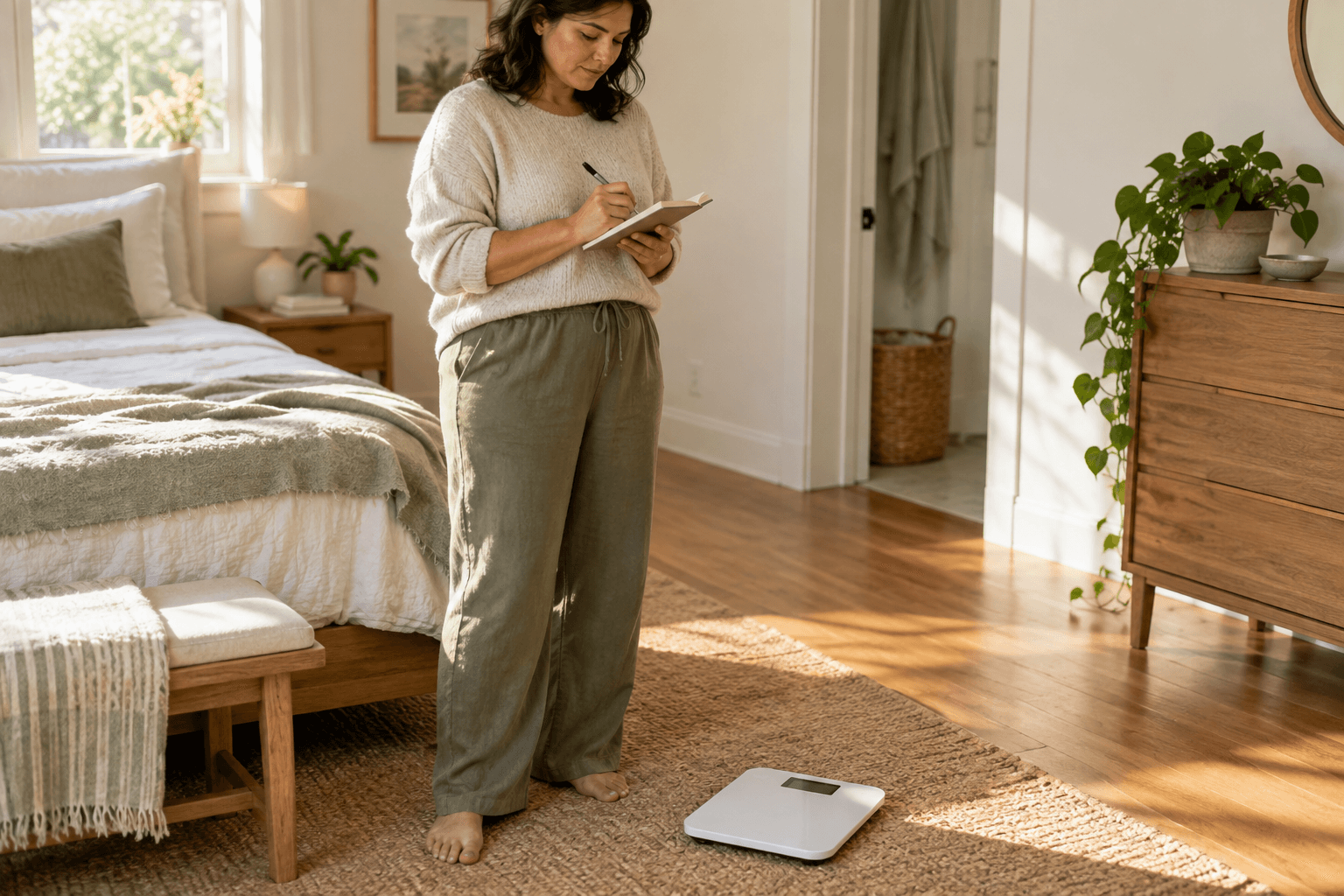
Useful health tools
Try one of our most searched health calculators.
BMI Calculator
Estimate body mass index from height and weight, with a plain-language category.
Daily Calorie Needs Calculator
Estimate maintenance calories and gentle weight-change ranges by activity level.
Sleep Calculator
Work backward from a wake-up time to estimate when to get into bed for an adult sleep target.
Quick answer: Weight can fluctuate day to day because a scale measures your body at that moment, not body fat alone. Fluid, food and drink, bowel contents, menstrual changes, exercise recovery, medicines, and weighing conditions can move the number. Compare like with like, follow a longer trend, and seek care for sudden unexplained change or swelling.
Yesterday's habits felt steady, yet this morning's scale is higher. That jump can feel like a verdict. But a scale measures your total mass at one moment. It cannot tell you whether the change came from body fat, fluid, digestion, bowel contents, measurement conditions, or a health problem. The useful response is context—not punishment.
Why does weight fluctuate day to day even when nothing seems different?
Visible search results repeatedly explain water retention, sodium, carbohydrates, hormones, constipation, exercise, medicines, and weighing time. Many give a cause list but less help separating measurement noise from body context, choosing a psychologically safe schedule, or deciding when sudden change needs care. This guide adds a seven-day scale-and-context card without promising a universal “normal” number.
How can two fast changes mean different things?
Arun weighs after dinner on Sunday and before breakfast on Monday, then panics because the readings differ. The comparison mixes food, drink, clothing, time, and bathroom timing. His sister's weight rises quickly alongside new ankle swelling and breathlessness. She does not wait for a seven-day average; she seeks medical advice. Context decides the next step.
What should you check before reacting to the scale?
- First check whether weighing is useful and emotionally safe. If the number triggers restriction, bingeing, purging, dehydration, compulsive exercise, or repeated checking, pause home weighing and ask for eating-disorder-informed support.
- If you weigh, compare like with like: use the same scale on a hard, level surface, at roughly the same time, in similar clothing, and before or after the same daily routines.
- Record the reading once. Do not keep stepping on and off until you get a preferred number; repeat only when the scale was moved, the surface was unstable, or there was an obvious error.
- Add context, not blame: unusual meals, alcohol, travel, constipation, menstrual timing, harder exercise, illness, and medicine changes.
- Review the direction across several comparable readings rather than treating the highest or lowest day as the truth. A clinician may recommend a different schedule when weight monitors fluid status or treatment.
- Do not try to force the scale down with fasting, dehydration, laxatives, extra diuretics, or punishing exercise. Those responses can be harmful and do not explain the change.
- Skip the tracker and seek care sooner for rapid unexplained change with swelling, shortness of breath, chest pain, faintness, confusion, markedly reduced urination, or another concerning symptom.
Why does weight fluctuate day to day even when your routine is similar?
Your scale includes body water, stored fuel, digestive contents, muscle, bone, organs, and body fat. That is why a quick change cannot be translated directly into fat gained or lost. MedlinePlus notes that a sudden unexpected change can sometimes signal a medical issue.
Short-term movement often reflects fluid balance and what is inside the body. Meals, constipation, menstrual changes, travel, heat, illness, and some medicines can alter that context. Differences between people make a universal “allowed” daily range misleading.
Can sodium, carbohydrates, or a hard workout raise the scale?
They can coincide with a temporary increase, but one reading cannot prove the cause. Higher-sodium meals can be followed by fluid retention. Carbohydrate intake changes stored glycogen and associated water, while a larger meal has physical mass until it is digested.
Hard exercise may also be followed by short-term recovery-related fluid shifts. Record the workout, soreness, meals, medicines, and symptoms instead of prescribing yourself a compensatory workout.
Use a seven-day scale-and-context card
This card is designed to explain whether readings are comparable. It is not a calorie ledger and should not be used to grade your body.
| Lane | Record briefly | Question it answers |
|---|---|---|
| Measurement | Time, clothing, scale location, before or after food and bathroom | Was the comparison consistent? |
| Food and drink context | Later or larger meal, unusually salty meal, alcohol, major routine change | Was yesterday different? |
| Body context | Constipation, menstrual timing, illness, heat, travel, harder exercise | Could short-term fluid or contents differ? |
| Medicines | Starts, stops, dose changes—without changing them yourself | Does a prescriber need the timeline? |
| Symptoms | Swelling, breathlessness, dizziness, pain, urine change | Should you stop tracking and seek care? |
| Trend | Direction across comparable readings | Is there a repeated pattern rather than one outlier? |
If a clinician has asked for daily weights because of heart, kidney, liver, pregnancy, or another condition, use their timing and call thresholds. That medical monitoring is different from optional weight-management tracking.
How should you weigh yourself for a more useful trend?
If you choose to weigh, consistency matters more than finding a supposedly perfect moment. Use the same scale on a hard, level surface and compare readings collected at a similar time and point in your routine. A morning reading after using the bathroom and before breakfast is one common convention, but it is not mandatory unless your care plan specifies it.
Daily weighing is not required for everyone. The site's weight-maintenance dashboard without daily weighing offers routine, function, sleep, and clinical signals. If daily numbers cause distress, less frequent or clinician-only blind weights may be a safer choice.
What does the scale fail to tell you about progress?
A home scale cannot explain fitness, nutrition quality, glucose control, blood pressure, strength, or whether a plan is sustainable. Consumer body-fat estimates also shift with hydration and device assumptions.
Use the scale only when it changes a helpful decision. Pair it with the site's gradual exercise restart plan, realistic meals, sleep, energy, strength, and clinician-recommended markers. If the number drives harsh restriction, it is no longer neutral data.
When can a quick weight change point to fluid buildup?
MedlinePlus explains that swelling, or edema, is fluid buildup in body tissues and can cause rapid weight gain over days to weeks. Causes range from prolonged sitting or medicines to heart, kidney, liver, vein, or lymph problems. You cannot identify the cause from weight or ankle appearance alone.
Notice whether swelling is new, one-sided or widespread; whether shoes, rings, or clothing suddenly feel tighter; and whether breathing, urination, chest symptoms, or function changed. Do not start a diuretic, borrow one, or sharply restrict fluid or salt without individualized medical guidance. The standing-dizziness tracker can organize lightheadedness, but breathlessness, fainting, or rapidly worsening symptoms need faster care.
What should you ask if the trend keeps changing?
Bring the seven-day card and say: ‘These readings were taken under similar conditions. The direction changed over [time], and I also noticed [swelling, appetite, bowel, menstrual, breathing, urine, sleep, or other symptoms]. These medicines changed on [date]. What needs evaluation, and what should make me seek urgent care?’
Ask whether your health conditions require a specific weighing schedule, whether any medicine could affect weight or fluid, and which other markers matter more. If your goal is weight loss, the answer should not automatically be a harsher diet. NIDDK describes weight as influenced by health, medicines, sleep, environment, family history, eating patterns, and activity—not character.
What common scale-weight mistakes should you avoid?
- Calling every overnight increase fat gain or every overnight decrease fat loss.
- Comparing an evening weight after meals with a morning weight after using the bathroom.
- Assigning one food—especially salt or carbohydrates—as the cause without checking the wider pattern.
- Changing prescription medicines, fluid intake, or diuretics to chase a number.
- Assuming a smartwatch or body-fat scale can identify exactly which tissue or fluid changed overnight.
- Waiting to finish a trend chart when sudden change comes with swelling, breathing trouble, chest symptoms, or severe illness.
- Continuing frequent weighing when it is worsening anxiety or eating-disorder behaviors.
When should weight fluctuation get medical care?
Contact a clinician for sudden or unexplained weight gain or loss, new or persistent swelling, a change after starting or changing medicine, or a trend that continues despite comparable measurements. Seek urgent or emergency care for severe breathing difficulty, chest pain, fainting, confusion, coughing blood or frothy sputum, one-sided painful swelling, or swelling with a severe allergic reaction. People with heart, kidney, or liver disease may have a clinician-set action threshold; follow that personal plan rather than a generic number online.
Questions this guide answers
These are the practical questions readers usually bring to this topic. The short answers below are intentionally direct, and the surrounding sections explain the context, cautions, and when professional guidance matters.
Why does my weight change overnight?
Fluid balance, food and drink still being processed, bowel contents, menstrual changes, exercise recovery, medicines, and measurement timing can all change an overnight reading. The number alone cannot identify which factor mattered.
Is daily weight fluctuation normal?
Some day-to-day movement is expected, but there is no single normal amount for everyone. Focus on comparable conditions, your longer trend, symptoms, and any clinician-set monitoring plan.
Does an overnight gain mean I gained body fat?
Not necessarily. A rapid change includes water and digestive contents and cannot be translated directly into body-fat change from one reading.
What time of day should I weigh myself?
If you choose to weigh, use a repeatable time and routine on the same scale and surface. Morning after using the bathroom is common, but follow a clinician's instructions when weight is part of medical monitoring.
When should weight fluctuation worry me?
Contact a clinician for sudden unexplained change, persistent swelling, or a continuing trend. Seek urgent help when change comes with severe breathlessness, chest pain, fainting, confusion, or other serious symptoms.
Sources
Health Wellness Daily uses current government medical, weight-management, clinical, and eating-disorder resources to support health claims. Sources reviewed for this article include:
- MedlinePlus: Body weight
- MedlinePlus Medical Encyclopedia: Swelling
- NIDDK: Factors affecting weight and health
- Cleveland Clinic: Reasons weight fluctuates
- Cleveland Clinic: The best time to weigh yourself
- NEDA: Eating disorders screening tool
- NHS: Oedema
By Lalit S · Researched and sourced, not medical advice · Last reviewed 2026-09-22
A note before we start: I'm not a medical professional. This is a researched, plain-language guide with every health claim linked to a credible source so you can check it and bring it to your own doctor. It's for general education — not a diagnosis, and not a substitute for care from someone who knows your history.
How this article was made: I researched current guidance from the sources above, drafted with AI assistance, and fact-checked every claim against its source before publishing. I'm not a medical professional — corrections from clinicians are welcome at contact@healthwellnesdaily.com.
Medical disclaimer: This content is for general information only and is not medical advice. Always consult a qualified healthcare professional about your own symptoms.



Comments
Verified readers can comment. New comments are reviewed before they appear.