Article library
Browse health articles
Browse practical, source-aware health articles by topic, keyword, and publish date, with clear safety notes and related educational tools.
 Fitness & Movement
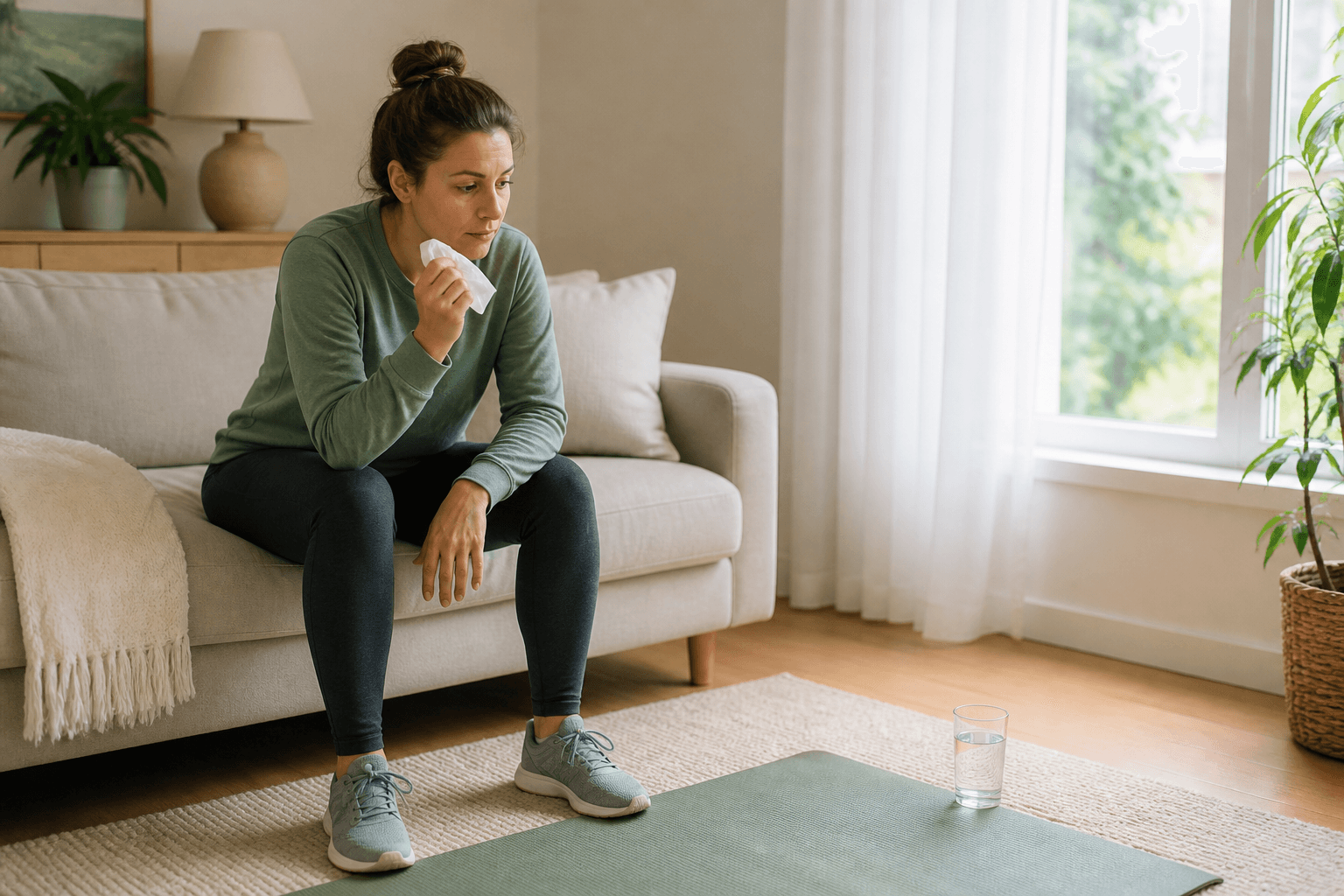
Exercise When Sick: A Safe Skip-or-Move Check
Exercise when sick is not a test of discipline. Skip training if you have fever, chest pain, unusual shortness of breath, marked weakness, vomiting, diarrhea, or symptoms that are worsening. With only mild nose or throat symptoms, gentle movement at home may be reasonable if it feels easy—but rest is always a valid choice.
 Skin Care
Why Does Moisturizer Burn My Face? What to Check
If moisturizer burns your face, stop applying it and gently rinse it off if the feeling is more than mild or does not settle. Stinging can happen on dry or irritated skin, but a product reaction is also possible. Record the timing, visible changes, and recent routine changes instead of assuming every burn means a damaged skin barrier.
 Sleep & Recovery
Can't Fall Back Asleep After Waking Up? Try This Reset
If you can't fall back asleep after waking up, avoid turning the night into a test. Keep light and stimulation low, skip the clock, and move to a safe quiet activity if frustration builds. Return to bed when sleepiness comes back. If the pattern repeats or affects daytime safety, track it and ask for professional help.
 Diabetes & Blood Sugar
Blood Sugar Spike After Exercise? What to Track
A blood sugar spike after exercise can happen, especially after intense intervals, sprints, heavy lifting, or competitive effort. Stress hormones can prompt the liver to release glucose, but food, medicine timing, illness, device lag, and starting glucose also matter. Record the pattern and follow your diabetes plan instead of adding insulin or repeating exercise on your own.
 GLP-1 & Weight Management
GLP-1 Fatigue: What to Track Before You Push Through
GLP-1 fatigue may be listed with some medicines, but tiredness can also overlap with eating less, vomiting or diarrhea, glucose changes, poor sleep, or another problem. Instead of assuming you must push through, capture the timing, intake, symptoms, and effect on daily function, then share that pattern with your prescriber.
 Conditions & Prevention
Dizziness When Standing Up: What to Track
Dizziness when standing up can happen when your circulation does not adjust quickly to the position change, but that pattern alone does not prove low blood pressure. Sit or lie down to prevent a fall, note what the sensation feels like and how long it lasts, and arrange care if it recurs, causes fainting, or comes with warning signs.
 Nutrition
How to Read Added Sugar on Food Labels
To read added sugar on a U.S. food label, check the serving size first, then find “Includes X g Added Sugars” beneath Total Sugars. The added-sugar grams are already part of Total Sugars, so do not add the two numbers together. Use % Daily Value to compare similar products, while considering the whole food and your usual portion.
 GLP-1 & Weight Management
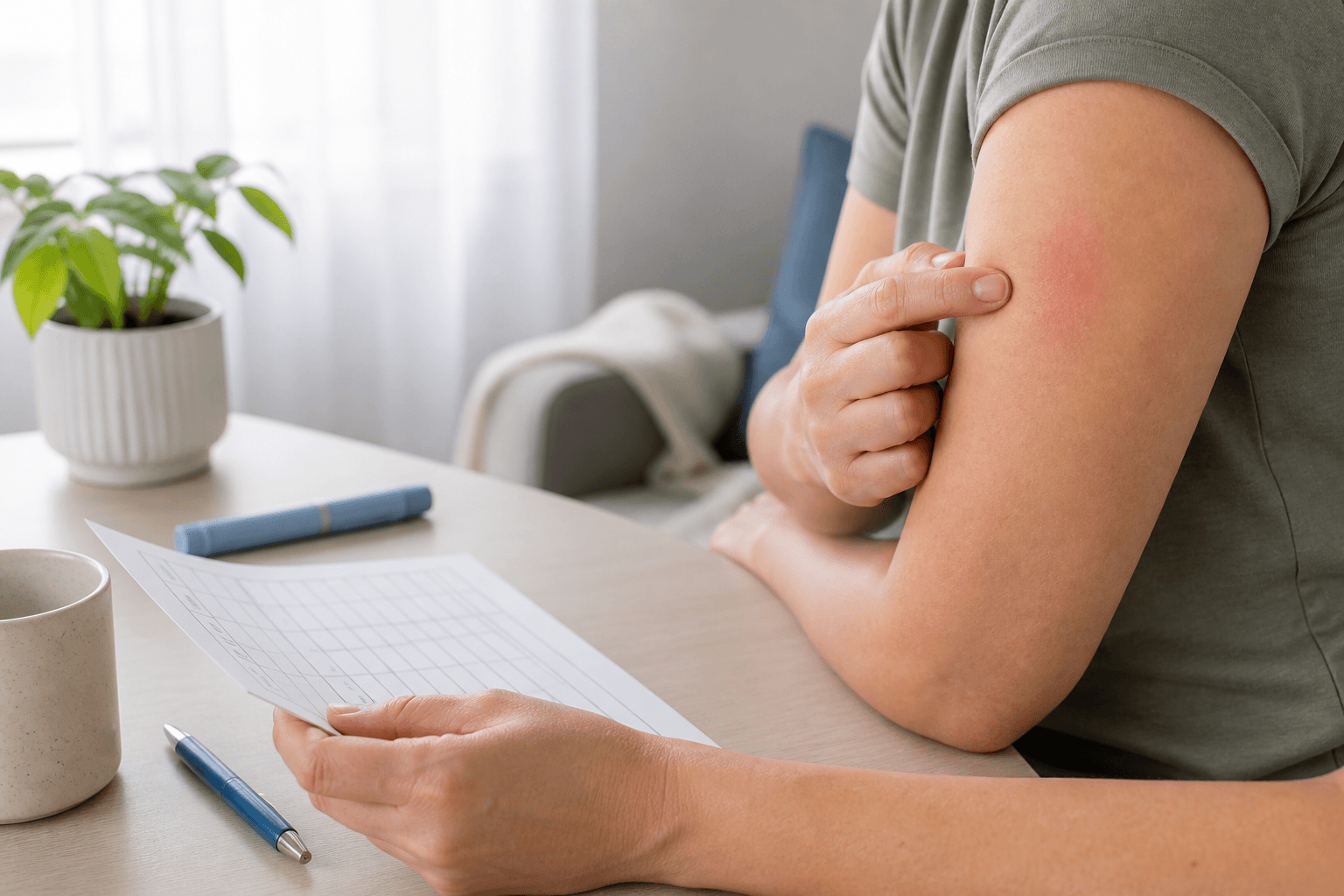
GLP-1 Injection Site Reaction: What to Check
A small area of redness, itching, tenderness, swelling, or a firm bump can happen after a GLP-1 injection. Do not diagnose the cause from appearance alone. Note where it is, when it began, whether it is shrinking or spreading, and whether you have symptoms elsewhere. Breathing trouble, facial or throat swelling, dizziness, or fainting needs emergency help.
 Fitness & Movement
How to Start Exercising Again After a Break
To start exercising again after a break, use your current capacity—not your old routine—as the baseline. Begin with short, comfortable sessions, keep recovery days, and change one variable at a time. Stop for warning symptoms, and get individualized advice when illness, injury, pregnancy, disability, or a chronic condition changes safety.