Daily Sunscreen in 2026: What New SPF Trends Mean for Real Skin
Sunscreen is trending again because formulas are getting better and misinformation is still spreading. The best SPF is the one you will use.
 Lalit SJuly 20, 20268 min read
Useful health tools
Try one of our most searched health calculators.
BMI Calculator
Estimate body mass index from height and weight, with a plain-language category.
Daily Calorie Needs Calculator
Estimate maintenance calories and gentle weight-change ranges by activity level.
Sleep Calculator
Work backward from a wake-up time to estimate when to get into bed for an adult sleep target.
Quick answer: Sunscreen is trending again because formulas are getting better and misinformation is still spreading. The best SPF is the one you will use. Choose broad-spectrum SPF 30 or higher for daily exposed skin. This guide explains the evidence, practical cautions, and signs that mean it is time to speak with a qualified healthcare professional.
A trend-aware sunscreen explainer for readers confused by new filters, tinted formulas, mineral claims, and social media SPF myths.
Skin care advice gets noisy quickly because trends, ingredient lists, influencer routines, and medical skin conditions often share the same feed. The useful version starts with comfort, protection, and a routine your skin can tolerate.
Readers often arrive at this topic after a confusing lab result, a rough night, a new symptom, or advice that sounded too simple. Start with what is true for your situation.
What is the most useful quick take?
- Most useful first step: Choose broad-spectrum SPF 30 or higher for daily exposed skin.
- Do not miss: Using SPF only at the beach.
- Safety cue: Ask a dermatologist for help if sunscreen repeatedly causes rash, eye swelling, severe stinging, acne flares that do not settle, photosensitive reactions, or if you have a history of skin cancer, melasma, lupus, or medicines that increase sun sensitivity.
Why does this matter?
Daily SPF remains one of the highest-value skin care topics worldwide. Recent trend coverage highlights better textures, skin-tone-friendly formulas, and renewed discussion of advanced filters, while dermatology guidance still centers on broad-spectrum protection and consistent use.
A real-life way to decide
A reader owns three sunscreens but uses none daily: one burns their eyes, one leaves a gray cast, and one feels greasy under makeup. The better plan is to match sunscreen to the obstacle instead of deciding SPF is unrealistic.
For skin care content, we separate everyday cosmetic routines from symptoms that need a dermatologist or clinician, and we avoid promising that one product will cure acne, eczema, dark spots, aging, or irritation.
How can you use this information safely?
Pick one action that feels realistic and one question to bring to a professional if needed.
- Choose broad-spectrum SPF 30 or higher for daily exposed skin.
- Pick the format that solves your real barrier: tinted for visible cast or dark spots, mineral for some sensitive skin, gel or fluid for oily skin, cream for dry skin, and stick only for small touch-ups.
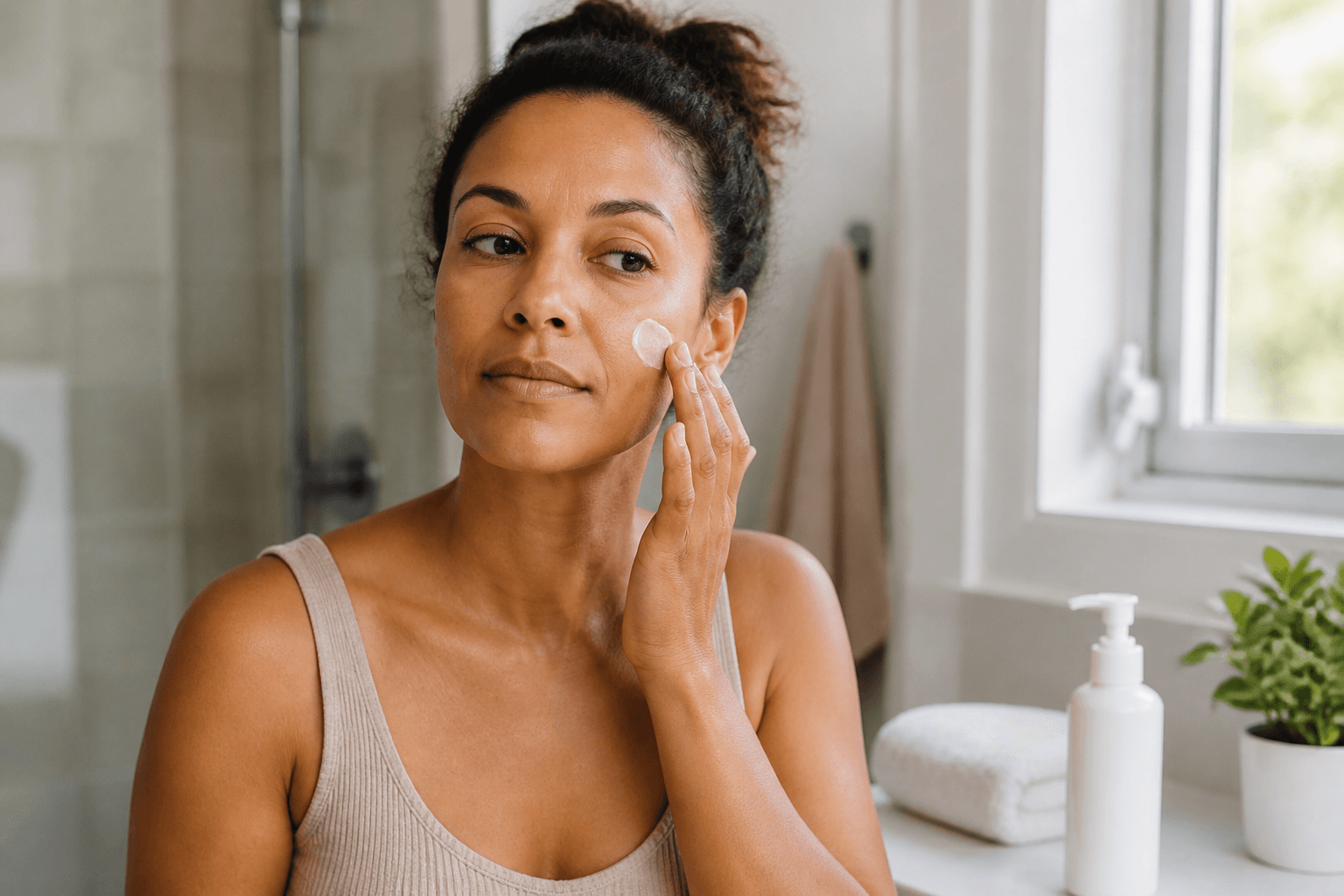
- Apply enough product and include ears, neck, hairline, scalp part, hands, and lips when exposed.
- Reapply during long outdoor time, sweating, swimming, or towel drying.
- Pair sunscreen with shade, hats, sunglasses, and protective clothing rather than expecting one product to do everything.
One helpful check is to ask, "Would I still do this on a low-energy day?" If the answer is no, make the step smaller before you judge your motivation.
Connect sunscreen to dark spots and barrier repair
Sunscreen is not only about sunburn. It is also central to preventing worsening hyperpigmentation and protecting irritated skin. For a calmer base routine, read skin barrier repair. For brown patches, acne marks, or melasma-prone skin, use the dark spots routine before investing in multiple brightening serums.
Questions this guide answers
These are the practical questions readers usually bring to this topic. The short answers below are intentionally direct, and the surrounding sections explain the context, cautions, and when professional guidance matters.
Is mineral sunscreen safer than chemical sunscreen?
Both can be appropriate. Mineral formulas sit on top of skin and may suit some sensitive users, while chemical formulas may feel lighter. The safest sunscreen is one you tolerate and use correctly.
What SPF should I use daily?
Dermatology groups commonly recommend broad-spectrum SPF 30 or higher for exposed skin.
Do I need sunscreen indoors?
It depends on window exposure and photosensitive conditions. People treating melasma or dark spots often benefit from consistent daily protection.
Can sunscreen cause acne?
Some formulas can feel heavy or clog-prone for certain users. Try non-comedogenic, lightweight, gel, or fluid formulas and patch test.
What common mistakes should you avoid?
- Using SPF only at the beach.
- Trusting DIY sunscreen recipes.
- Applying too little product.
- Assuming darker skin never needs sun protection.
When should you seek medical care?
Ask a dermatologist for help if sunscreen repeatedly causes rash, eye swelling, severe stinging, acne flares that do not settle, photosensitive reactions, or if you have a history of skin cancer, melasma, lupus, or medicines that increase sun sensitivity.
Clarity is a health tool too.
Sources
Health Wellness Daily uses credible medical and public-health sources to support health claims. Sources reviewed for this article include:
- American Academy of Dermatology: Skin care basics
- American Academy of Dermatology: Sunscreen FAQs
- American Academy of Dermatology: Acne resource center
- American Academy of Dermatology: Dark spots and melasma
- NIAMS: Eczema overview
- MedlinePlus: Skin conditions
- FDA: Sunscreen information
By Lalit S · Researched and sourced, not medical advice · Last reviewed 2026-07-20
A note before we start: I'm not a medical professional. This is a researched, plain-language guide with every health claim linked to a credible source so you can check it and bring it to your own doctor. It's for general education — not a diagnosis, and not a substitute for care from someone who knows your history.
How this article was made: I researched current guidance from the sources above, drafted with AI assistance, and fact-checked every claim against its source before publishing. I'm not a medical professional — corrections from clinicians are welcome at contact@healthwellnesdaily.com.
Medical disclaimer: This content is for general information only and is not medical advice. Always consult a qualified healthcare professional about your own symptoms.


Comments
Verified readers can comment. New comments are reviewed before they appear.